
On This Page
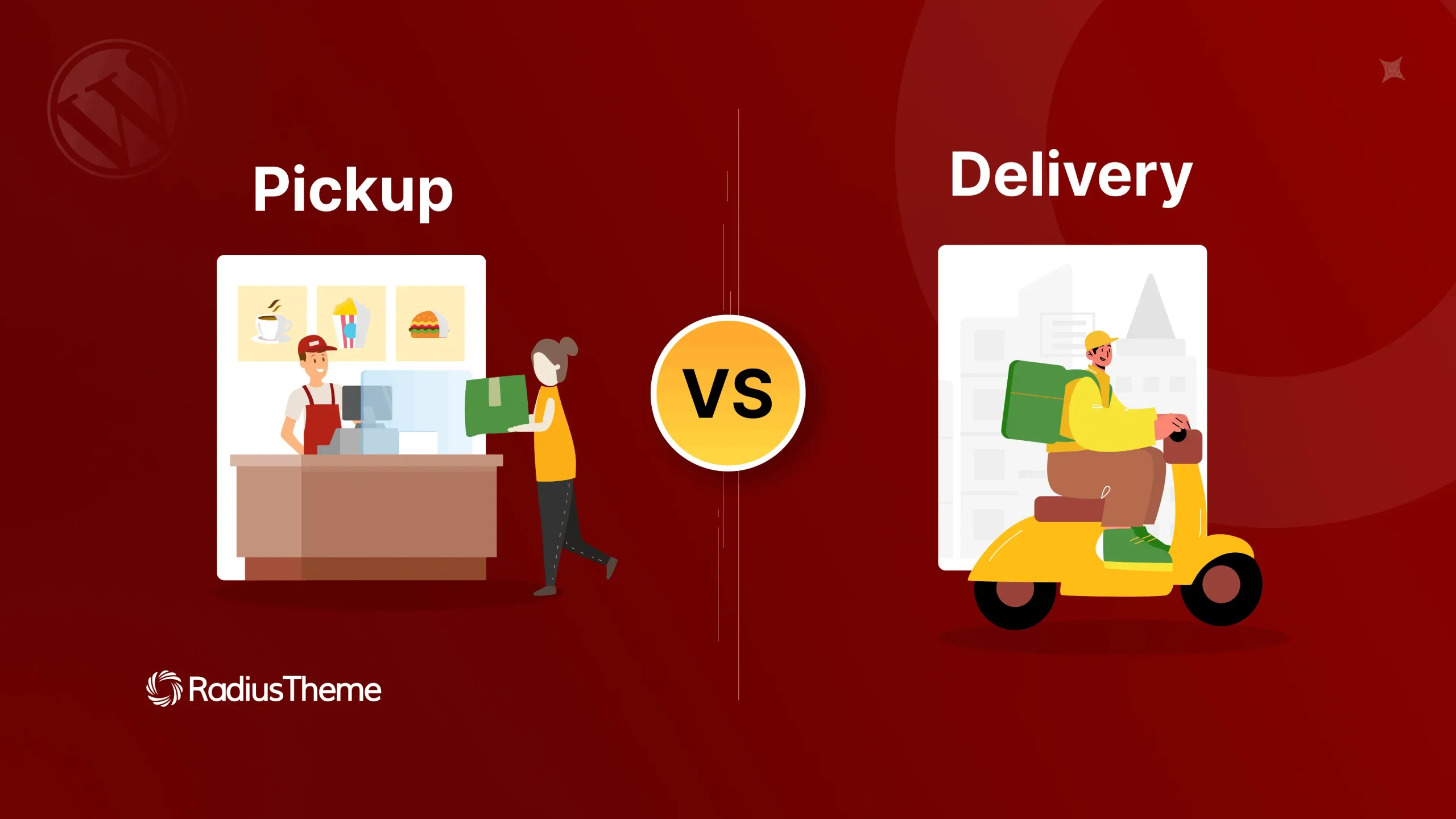
Ask ten restaurant owners whether pickup or delivery is better, and you’ll get ten different answers. Some swear delivery is where the growth is. Others will tell you delivery quietly ate their margins alive.
Here’s the thing: it’s not really an either/or question. The restaurants doing best right now offer both — but they’re smart about how they set it up, price it, and steer customers between the two.
This guide breaks down the real difference between pickup and delivery, when each one makes sense, and exactly how to run both from your own website without letting a delivery app take a bite out of every sale.
👉 Good Read: Unique Restaurant Name Ideas
The Short Answer
If you want the takeaway before the details:
- Pickup is more profitable. No driver, no fuel, no commission, less packaging. The money mostly stays with you.
- Delivery brings reach. It gets you customers who’d never have walked in, and it’s what a big chunk of people expect in 2026.
- The winning move is offering both from your own site — and gently nudging regulars toward pickup or direct delivery, where you keep the margin.
Now, the details.
Why Pickup Quietly Beats Delivery on Profit
Let’s talk numbers, because this is where a lot of restaurant owners get surprised.
When a customer orders through a third-party delivery app, that platform typically takes 20% to 30% commission on the order. On top of that, you’re absorbing extra packaging, and delivery food is more likely to arrive wrong, cold, or late — which means more refunds and worse reviews.
Pickup skips almost all of it. There’s no driver to pay, no mileage, no commission if the order comes through your own site, and less packaging. Industry analyses consistently find restaurants earn meaningfully more profit — often in the range of 20% to 35% more — on a pickup order than on a comparable delivery order.
Customers feel it too. Third-party delivery fees can add $5 to $8 or more to a typical order, and studies of the major apps have found all-in markups (fees, taxes, tips) that push a meal’s cost up 60% to 90% above what it costs to just go pick it up. Plenty of people would rather drive five minutes than pay that.
And that’s showing up in the data: pickup spending has been holding steady with growing basket sizes, while delivery growth has slowed. Value-conscious diners are figuring out that pickup gives them the convenience of not cooking without the delivery premium.
So Why Offer Delivery at All?
Because profit per order isn’t the only thing that matters. Volume matters. Discovery matters.
Delivery — especially through the big apps — puts you in front of people who have never heard of you. A large share of first-time orders on delivery platforms come from customers who were browsing, not searching for a specific restaurant. That’s exposure you can’t easily buy elsewhere.
There’s also a compounding effect people miss: a large majority of delivery customers also dine in at the same restaurant. The person who orders your pad thai on a rainy Tuesday may book a table on Saturday. Delivery isn’t only a delivery sale — it’s often a customer acquisition channel wearing a delivery costume.
And for many customers, delivery simply isn’t optional. If they can’t get it delivered, they’ll order from someone who can.
So the honest answer is: don’t kill delivery. Just stop letting it be your only channel.
👉 Tips: How to Set Up Online Ordering for Cloud Kitchen
The Strategy That Actually Works: Both, On Your Own Terms
Here’s the model most successful independent restaurants have landed on.
Use the third-party apps for discovery. Let DoorDash and Uber Eats introduce you to new people. Accept that you’ll pay commission on those orders — treat it as a marketing cost, not a permanent tax.
Own the repeat business. Once someone has tried your food and liked it, you want their next order coming through your own website, where you keep 100% of the money and you own the customer data. That’s where your own pickup and delivery setup comes in.
Make pickup the easy, rewarding choice. Offer both options at checkout, but give people a reason to choose pickup — a small discount, a loyalty perk, faster timing. You’re steering behavior toward your highest-margin channel without taking anything away.
This is the whole game: apps for reach, your own site for profit.
How to Set Up Both on Your Restaurant Website
Now the practical part. To offer pickup and delivery directly, you need three things on your site: a menu customers can order from, a checkout that handles both fulfillment types, and a way to manage the orders coming in.
If your site runs on WordPress, this is more straightforward than most owners expect. A restaurant ordering plugin like Food Menu Pro handles the whole flow — it turns your menu into an orderable storefront using WooCommerce, with pickup and delivery built in as separate options. Because it lives on your own site, there’s no commission taken from any order. No code required, either.
Here’s how to configure it properly.
1. Let the customer choose at checkout
The single most important setting: give the customer a clear pickup-or-delivery choice before they finish ordering. Don’t bury it. Don’t make them guess.
Each option should show what it actually costs and how long it’ll take. “Pickup — ready in 20 minutes, free” next to “Delivery — 40–50 minutes, $4 fee” lets people self-select, and you’ll be surprised how many pick the cheaper, faster option when you show it plainly.
2. Set honest delivery zones
This one saves you from a world of pain. Define exactly how far you’ll deliver — by distance or postcode — and stop accepting orders outside it.
Going too wide is the classic beginner mistake. Long-distance orders arrive cold, drivers get stretched thin, and one bad review from a 45-minute-old burger costs more than the order was worth. A tight radius keeps food quality high and your delivery costs sane.
If it makes sense, charge different delivery fees for different zones. A nearby order and one at the edge of your range don’t cost you the same to fulfill.
3. Set separate timing for each option
Pickup and delivery need different clocks. Pickup might be ready in 15–20 minutes; delivery might realistically take 40. Set those estimates separately and honestly.
Also configure your operating hours, closed days, and holidays, so customers can’t place an order you’ll have to cancel. Nothing sours a new customer faster than a refund email.
A useful trick: let customers schedule ahead. Scheduled orders — “ready at 6:30” — let you batch your kitchen work and, for delivery, group several orders into one efficient run instead of sending a driver out for each one. Batching deliveries into time windows is one of the biggest levers for cutting per-delivery cost.
4. Price delivery for what it actually costs you
You’re allowed to charge a delivery fee. Customers expect one. What you shouldn’t do is quietly absorb the full cost of driving food across town and wonder why your margins vanished.
Work out what a delivery genuinely costs you — driver time, fuel, packaging — and set your fee and minimum order value accordingly. A minimum order threshold (“free delivery over $30”) does double duty: it protects your margin and nudges average order value up.
5. Reward pickup
Since pickup is your best channel, give people a reason to use it. Options that work:
- A small pickup-only discount (even 5–10% feels generous and still costs you less than a delivery).
- Loyalty points that only apply to direct orders.
- Genuinely faster service — “skip the wait, order ahead.”
Panera and Chipotle built entire operations around this behavior. You can do a scaled-down version.
6. Get your kitchen workflow straight
Two fulfillment types means two workflows, and this is where restaurants get sloppy.
Your kitchen needs to instantly see which orders are pickup and which are delivery, because the packing and timing differ. A kitchen display screen showing incoming orders in priority order — clearly tagged — prevents the classic disaster where the delivery driver is waiting while a pickup order that came in later goes out first.
Also worth setting up:
- Automatic kitchen ticket printing so cooks aren’t glued to a screen.
- Order status tracking — “preparing,” “ready,” “out for delivery” — so customers stop calling to ask.
- A clearly designated pickup spot so customers and drivers aren’t crowding the same counter.
- Staff roles, so your kitchen team, managers, and drivers each see only what they need.
Food Menu Pro includes a kitchen monitor, order tracking and timelines, POS printing, and a front-end dashboard your staff can run without ever touching the WordPress admin — which matters at 7pm on a Friday when nobody has time to hunt through menus.
7. Keep customers informed automatically
Both pickup and delivery customers want one thing: to know what’s happening.
Automated SMS or WhatsApp notifications — order confirmed, food ready for pickup, driver on the way — cut down the “where’s my food?” calls dramatically and make a small operation feel polished. For pickup especially, a “your order is ready” text is the difference between a customer arriving at the right moment and one standing around getting annoyed.
Final Thoughts
Pickup and delivery aren’t rivals. They’re two doors into the same restaurant, and each one suits a different customer on a different night.
The mistake isn’t choosing one over the other. It’s letting a third-party app own both doors, so that every customer you serve costs you a quarter of the sale and you never learn their name.
Run pickup and delivery from your own website, price each one honestly, keep the kitchen workflow clean, and give people a small reason to pick the option that’s better for your margins. A WordPress setup with a purpose-built ordering plugin like Food Menu Pro gives you both channels, commission-free, without hiring anyone.
Start with pickup, get it smooth, add delivery with a tight radius — and keep the profit where it belongs.