On This Page
Online business models present excellent possibilities for successful startups. All you need to do is figure out a market gap that you can fulfill and earn money while at it. However, picking one that will work for you can be challenging.
There are many online business models you could consider, one of which is the peer-to-peer (P2P) model. Its overwhelming impact makes it an attractive option. Join us as we explain the model, its examples, business ideas, advantages, challenges, revenue models, and much more.
What is a Peer-to-peer (P2P) Business Model?
A P2P business model entails two parties, a seller and buyer, interacting to deliver products and services with little to no third-party involvement. This model mostly involves collaborations to produce goods and services together.
In these transactions, the buyer and seller deal with each other directly to deliver the goods or services and exchange payment. The seller is a private individual owning the means of production and finished product. The P2P business model eradicates firms that own the means of production. However, financial intermediaries are still necessary to connect the two parties. The intermediary provides a platform with rules and regulations, payment systems, and other elements necessary for the best functionality.

What is a Peer-to-Peer Business Model?

Types of P2P Businesses
Online peer-to-peer marketplaces maintain the connection between people who want a product or service and those who need it. The website facilitates payment processing and the maintenance of trust between the two parties. There are various types of peer-to-peer marketplaces—three of the most common ones are:
- Peer-to-peer rental: Consumers can rent items from other consumers in peer-to-peer rental businesses. Airbnb and Turo are platforms that enable travelers to rent accommodations and cars. Similar businesses offer rentals for swimming pools, sporting equipment, event grounds, and more.
- Peer-to-peer marketplaces: These marketplaces pick a niche and facilitate user connection, communication, and transactions. For instance, Etsy invites sellers and buyers of handmade items, while Poshmark is all about secondhand items.
- Peer-to-peer services: This type of P2P business is a service marketplace. Those offering a service use it to connect to consumers who fit their criteria. Lyft and Uber are famous examples that enable drivers to meet and offer passengers their services.
If you’re exploring more business model ideas, check out our guides on the Classifieds Business Model and the Online Directory Business Model for additional inspiration and insights.
10 Successful P2P Business Model Examples
Many contemporary businesses have embraced the P2P model. Entrepreneurs and regular people have recognized the business model’s viability and adopted it with obvious benefits. Here are 10 of the best-known P2P business model examples.
| Business | What it Does | How it’s Peer-to-peer |
| Airbnb | Lets homeowners rent out properties and spare rooms to travelers directly | Homeowners and travelers interact directly through the platform, bypassing travel agencies |
| Uber | Connects drivers with passengers to deliver on-demand transportation | Passengers book rides with drivers on the app rather than with centralized taxi services |
| Fiverr | Connects freelancers and clients to exchange services for a fee | Freelancers and clients communicate directly with no intermediary agencies |
| BitTorrent | Facilitates file sharing between users | Users share files between themselves with no centralized server |
| Links professionals with networks and job opportunities | Professionals and recruiters communicate directly to collaborate, consider opportunities, and network | |
| Turo | Allows car owners to rent them out to people who need them | Vehicle owners interact directly with renters to utilize an otherwise underutilized asset |
| eBay | Connects businesses and individuals who want to trade new and used items | Buyers can bid on items or purchase them directly from sellers |
| Outdoorsy | Lets RV owners list and rent out vehicles to renters at custom prices | RV owners communicate with renters directly, with the platform only acting as an intermediary |
| Venmo | Facilitates financial transactions between individuals with links to bank accounts and debit and credit cards | Individuals complete transactions with no need for traditional banking intermediaries |
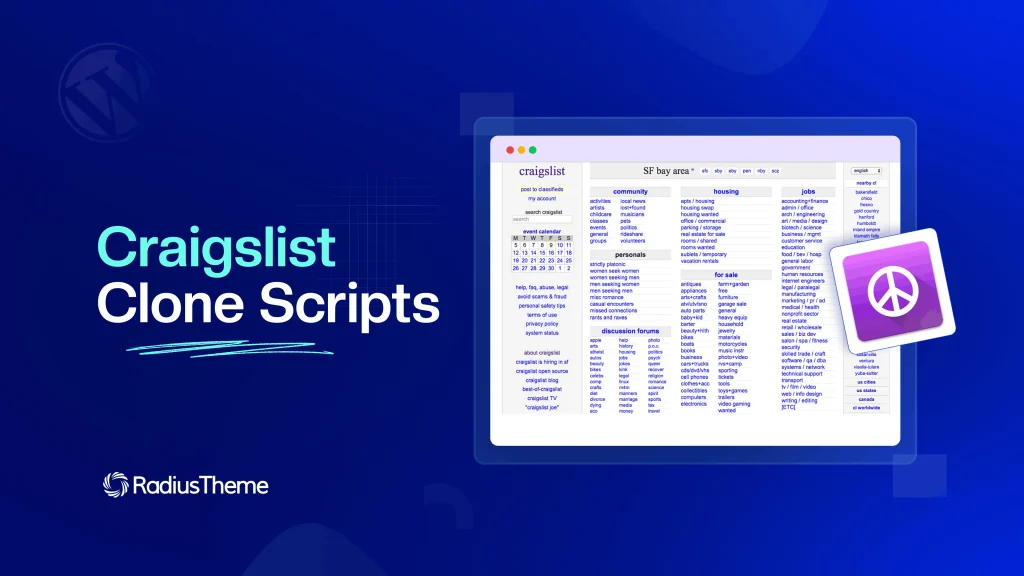
| Craigslist | Allows individuals to post and browse ads in various categories | Users interact and transact with each other with no need for intermediaries |
We are surrounded by P2P businesses, most of which we barely notice. These successful peer-to-peer business model examples show the model’s astronomical potential. Let’s look at some peer-to-peer business ideas that you can adopt.
P2P Business Ideas

You can apply the p2p business model to various industries with stellar results. Its versatility and low capital demands enable you to weigh many possibilities. Here are some peer-to-peer business ideas that have high potential.
- Ridesharing services: You can create a ridesharing platform like Uber or Lyft that connects cab drivers with passengers. It offers a convenient service for your users and a flexible income option for you.
- Freelance marketplaces: Creating a platform like Fiverr and Upwork enables freelancers to offer services to clients in need. They can interact and negotiate terms while bypassing typical employment channels.
- Second-hand marketplaces: Websites like Lumikha and Octopus Club invite specific communities to exchange second-hand goods. Such a business promotes community engagement and sustainability.
- Service-sharing platforms: Your service-sharing website would focus on connecting service providers with consumers. Services may include home cooks and local tour guides. You can get a tutorial How to Make a Free Service Finder Website.
- Yardwork platforms: Gardening enthusiasts meet homeowners on such platforms to help users earn and save money.
- Rental platforms: You can create a website where people can rent out underutilized assets, including homes and cars, like Airbnb and Turo. You can read : How to Create a Free Rental Property Website
- Supply chain finance: These platforms offer a financing service by connecting businesses with investors in the supply chain. CapBay and Incomlend have executed this model successfully.
- Product-selling marketplaces: You can create a marketplace where users can sell niche products, secondhand goods, and handmade items.
- Insurance platforms: These platforms enable users to share insurance costs and risks. You can offer more services like the cash-back bonus. Friendsurance gives small consumer groups that end each year claimless.
- Lending platforms: They connect borrowers to individual investors instead of traditional bank loans. A website like Honeycomb Credit facilitates a crowdfunding style of lending.
Advantages of the P2P Business Model
The popularity and success of the P2P business model show that it has many merits. Its businesses offer many advantages to its operators and users. Among them are the following.
- Cost efficiency: Peer-to-peer businesses eliminate middlemen, saving buyers and sellers money. They can both benefit from economies of scale since most platforms charge a fixed fee.
- Fosters higher competence: P2P businesses assemble a restricted target market in one place. This allows individuals and small businesses to focus their best skills on it. This, in turn, draws more clients to them without forcing them to commit significant investment in marketing and advertising.
- Zero-code P2P marketplace builders: Creating a website that handles buyers and sellers without expert help sounds like a daunting proposition. However, with technology like WordPress listing themes and plugins, entrepreneurs with no coding expertise can do it themselves.
- No inventory necessary: Setting up a peer-to-peer business is typically fast and inexpensive. The lack of inventory is a big reason for this. Unlike other businesses that need significant investment to accumulate inventory, P2P businesses leave it to users to create it for them.
- Facilitating connections: P2P platforms create otherwise impossible user connections. For instance, guests would find it challenging to get short-term rental accommodations without Airbnb. The platforms facilitate smooth, mutually beneficial collaborations.
- Direct interaction: The direct interactions that P2P businesses foster are of great benefit. Product and service providers get to communicate, negotiate, and transact without middlemen. For instance, Fiverr allows contractors and clients to agree on all details of deals before completing transactions.
- Flexibility and convenience: The multiple high-quality alternatives that peer-to-peer platforms offer result in unprecedented versatility and convenience. There are always multiple providers of any service or product that you may need.
- Opportunity creation: P2P platforms empower individuals by presenting avenues for using underused assets and skills. Businesses do this by fostering collaborations and breaking down various barriers to income generation.

Challenges of Applying Peer-to-peer Business Ideas (and Simple Solutions)
Although adopting a P2P model has many benefits, it presents a few challenges. Here are the most prevalent ones.
- Quality control: The greatest downside of P2P business models is the inability of the intermediary to control service quality. Although they can ensure that users observe the general platform rules, they can’t vet them to establish quality standards. Many users have negative experiences on the platforms as a result.
Solution: Don’t hesitate to kick out users with consistent complaints against them. Put in place an active quality assurance system.
- Future growth: Although the peer-to-peer business model has not produced as many billion-dollar mammoths as other models, many startups are adopting it due to its many merits. What’s more, it is likely to witness exponential growth in the immediate future.
Solution: Focus on providing the best user experience and wait for the inevitable growth.
- Restriction on niches: This model doesn’t give you the luxury of covering too many niches at a time.
Solution: Focus vertically on contained niches to find the best fit. You can scale to other markets and categories once you have found the best fit and started growing.
- Pinpointing the right problems: The wrong launching sequence can misallocate resources.
Solution: The only way to identify and solve arising issues is to release the initial version swiftly and collect response data. Use the feedback from your earliest users to iron out issues and polish up the marketplace.
- Delayed payments: Some P2P businesses are known for withholding payments beyond reasonable timelines. This uncouth practice is meant to earn interest on money belonging to other parties, which can cause service providers to suffer cash flow problems.
Solution: Focus on various revenue generation methods to remain honest and reliable.
Choosing the Right Peer-to-peer Revenue Model
Considering your revenue model is important as you chart the path of your P2P business. You must find the right balance between user-friendly costs and financing the operations of your venture. Here’s a breakdown of the revenue models at your disposal.
Commission-based Revenue Model
The commission-based model is the most common among peer-to-peer marketplaces. The businesses take a commission on each transaction completed on the platform, either a percentage of the amount or a flat charge.
Merits:
- This model works perfectly for all P2P business types, as displayed by Uber, Airbnb, and Etsy.
- This model makes it incredibly easy to recruit sellers since they aren’t charged until they’ve gained value from the platform. It only costs them if they make a sale.
- Another advantage is its ability to scale up easily. The revenue and business grow simultaneously.
Challenges:
- Business leakages may occur if the value of your offer falls short of your commission structure. Leaks also occur when users complete transactions off your platform, resulting in missed commissions.
Solution: You should start by sharpening and making your value proposition so compelling that users see no reason to leave. You can also restrict users from communicating off the platform. For instance, Fiverr flags and ejects users who attempt to share direct contact information.
- Building a payment structure that applies a specific commission structure to all transactions in compliance with global regulations is a challenge.
Solution: Make use of excellent marketplace software that has built-in payment integrations. You can make use of the Classified Listing plugin, which integrates smoothly with multiple payment gateways.
Access-based Revenue Model
Businesses that adopt an access-based revenue model provide all platform purposes for free; they charge for enhanced access to certain users of features. Many websites classify some features and services as premium and charge a recurring fee for access.
You can create a tiered subscription plan and charge different recurring fees. This makes your model a version of the freemium business model. The biggest challenge you need to overcome is building up your business to offer enough value to command the fees you charge.
Promotion-based or Hidden Revenue Model
This model involves selling advertisements on your website and mobile apps. It requires a large enough user base to convince advertisers to pay to reach them. The best part of this model is that it enables you to attract many users, as you charge them nothing.
All these revenue models provide a basis for your growth. You need to be adaptable to new trends and offer enhanced efficiency. If you can incorporate two revenue models without compromising the site’s user-friendliness, you can combine them. eBay, for instance, combines advertising and transaction fees.
Features of a Successful Peer-to-Peer Marketplace
There are some basic features that are characteristic of P2P marketplaces. It is easy to miss the general pattern due to the differences in types and revenue models of P2P businesses. Before looking at how to create your own such website, let’s look at the building blocks of every booming P2P marketplace.
User Profiles
Your website should enable sellers and buyers to create user profiles without providing too much personal information. For example, they could provide their names, locations, buying or selling preferences, and contact information. However, you could exclude personal information if you’re afraid of business leakage.
You can enable the registration of user accounts with social media credentials. This is a feature that comes with the aforementioned Classified Listing plugin. Users can register by a single click linking to Facebook, Google, X, or Instagram. This makes the process easy and user-friendly.
Listings
You should allow all users to add a service or product listing to the website. The listing owner should be able to edit, delete, and add images to the listing. Other users should be able to comment, review, and rate the services and products. The Classified Listing plugin and its themes provide all this.
Account Verification
Avoid using bots and other spam methods for promotions. Ensure that all signups are legitimate. Demand account verifications to prevent spammers from registering on your site. Instead of being burdens to your users, these measures will assure them of the platform’s security.
Although email verifications are easy, they aren’t the most efficient, as users can create fake email accounts. Mobile number confirmations and facial recognition are more foolproof options.
Notifications
Seamless communication is vital for users to initiate and close deals quickly. Sometimes, potential transactions get lost in the fray if users don’t read their messages on time. This also affects your user-count and revenue negatively.
The best preventive measure is to send alerts via email addresses and phone numbers. Enabling push notifications is also a wise move.
Checkout
The checkout path includes the shopping cart, payment options, and checkout forms. Ensure your website has all these components, loads them fast, and shows transparency. Do all you can to give buyers a smooth checkout process.-
Users abandon purchases due to the lack of these aspects and other factors like complex checkout forms. Ensure that your site has a user-friendly checkout.
How to Build a Peer-to-peer Business from Scratch
Part of creating a peer-to-peer business is charting out a clear outline of your business.
Step 1: Pick and Understand Your Target Niche, Competitors, and Audience
Your first move should be to pick a niche. Although some marketplaces pick several niches, focusing on single fields has many benefits. It makes it easy for you to stand out from competitors and carve out a loyal following.
Conduct intensive research into your niche of choice. Examine and understand the players in that industry, including your competitors, other businesses, and consumers. The aim is to match and beat your competition and figure out how to make a positive and lasting impression on the consumers.
Observe any potential market gaps that you could fill. Learn why they exist and create plans on how to fill them. You can emulate the successful tactics of your competition and avoid their pitfalls.
Step 2: Choose a Platform and Create Your Site
The next step is to choose a platform on which to run your P2P business. WordPress is very popular, with 61.7% of all websites choosing it over other content management systems (CMSs). Here are some of the reasons why it’s so popular.
- Free and open-source: It is free to download and customize WordPress. Being open-source means that developers can customize it with no restrictions.
- Themes and plugins: WordPress has a directory with thousands of free and premium themes and plugins. They help you create and give your site top features easily.
- Ease of use: WordPress is beginner-friendly, with excellent wizards and a simple interface. Users don’t need prior web coding experience to use the platform.
- Large support community: WordPress has a huge community of users and developers providing support via forums, extensions, and tutorials.
- SEO-ready: This CMS is inherently optimized for high ranking on search engines. It also offers many SEO plugins that make it easier for you to attract traffic.
- Fully responsive and mobile-friendly: WordPress and its themes have mobile-friendly designs, so your website adapts seamlessly to all screen sizes.
- Security: It has excellent security features and a willing community to help with any security issues.
- Customizability: WordPress’s features, themes, and plugins make it incredibly easy to personalize your website.
- Scalability: WordPress allows you to easily add features and functions to your site as your site grows.
We recommend that you go with WordPress as we guide you on how to create your site. We will also suggest the best tools for your dream outcome.
Step 3: Create Your Website.
Websites in the P2P business model take different paths. Quite a few, like eBay and Craigslist, adopt a classified ads format. Whichever way you go, your site shouldn’t lack the most important features of a P2P platform.
The resources and path we recommend have everything you need. You can start with the Classified Listing premium bundle, which offers various themes and add-ons. The themes suit various niches, with some being multipurpose.
Although a free version of the basic plugin is available on WordPress, the premium one ensures that your website has all the important features. We’ve prepared meticulous instructions on how to create a classified website.
Step 4: Marketing and Promotion
After creating your platform, you need to apply various tactics to draw traffic. The first and most affordable way is SEO. Optimize your website with relevant keywords targeting users within your niche.
Create social media accounts on Facebook, X, and Instagram, and create posts that lead back to your platform. Keep up with current and trending news and mix them up in your posts and tags to reach large audiences.
Paid advertising options like Google and Meta are excellent for a new website. You can also pay an influencer matching your values to market your site. Ensure that you budget appropriately for these options.
Don’t rely too heavily on paid marketing; balance organic and paid advertising healthily. Use various content marketing strategies for a well-rounded approach.
Running a Successful P2P Business Model
A successful P2P business requires a few steps and strategies, such as creating a business plan and choosing a legal structure. Some of these steps are repetitive, but they are necessary for success.
These recurring steps begin with a business plan that documents your business’s plans. You should then adapt to your market, current technology within your niche, and the P2P business model. Simultaneously, figure out how to finance your plans, ideally through the revenue you generate.
You should then focus on customer satisfaction. Establish a customer support team and address any issues that your users raise. Monitor your site’s performance constantly while analyzing your customers’ feedback. Finally, keep conducting customer research and integrating your findings into your plans.