On This Page
You probably think about creating a fashion blog that makes you money. The problem is that you don’t know where to begin. You don’t know how to start a fashion blog that actually delivers results.
So, you search for a comprehensive and helpful guide on the web and land on this article. Congrats! You are on the right page. Now, you just need to read the entire blog carefully and take action. Keep reading it.
TL;DR
- This post is a complete 11-step blueprint for starting a successful fashion blog that can grow into a money-making brand.
- It covers everything from defining a profitable micro-niche and researching your target audience, to choosing a domain, hosting, and WordPress setup with the right theme and plugins.
- You’ll learn how to build essential pages, create a content ecosystem, and promote your blog. Finally, it explains multiple monetization options. Examples of top fashion blogs are included for design inspiration.
Step 1: Define Your Profitable Micro-Niche (Not Just a Topic)
It’s the most critical step in creating a successful fashion blog. You can get lost in the noise if you select a broad and generic topic.
No matter how much effort you put into it, you won’t get the desired outcome if you make the mistake of choosing a generic or broad niche at the beginning.
So, what should you do instead? Well, find an underserved micro-niche to become successful fast. To carve out your unique space, use this simple but powerful framework. Combine at least three layers to create a highly specific micro-niche that you can own.
Formula: Your Audience + Your Specific Style + Your Unique Angle
Here’s how to work with this formula. Let’s say you initially select a broad niche like plus-size fashion. Now, apply this formula to this broad niche and narrow it down into a micro niche.
Your Audience: Plus-size women in their 30s
Your Particular Style: Minimalist corporate style
Your Unique Angle: Create a functional capsule wardrobe
Thus, your micro-niche is minimalist corporate capsule wardrobes for plus-size women in their 30s. That’s why you use this formula to convert any broad niche into a micro-niche.
Okay, you’ve found your micro niche. Now is the time to validate the niche. You need to know if your chosen niche is a winner before you start creating a fashion blog around it. How do you do it?
Validate Your Micro-Niche
We recommend using Google Trends and Pinterest Trends to determine if your chosen niche has a stable or upward-trending graph.
Besides, check the TikTok hashtag volume for specific terms like #plussizeworkwear. Look for hashtags with 500k to 15 million views. This indicates a passionate, engaged audience that isn’t so massive that your new content will be completely drowned out.
Last but not least, visit Reddit’s subreddits where your target audience is most active. Inspect their questions, complaints, and requests for help.
If you see their problem-based discussion relate to your micro-niche, you’ve just struck gold. You can start creating blog posts to solve their problems through your fashion website. This is how you validate your micro-niche.
Step 2: Research Your Target Audience and Competitors
Your goal is to create a fashion blog that people love, visit often, and help you make money. So, visitors are essential for a fashion blog. You need to research your targeted visitors first before you build a fashion website.
Consider how you want to present yourself as a fashion blogger to them. You can brainstorm some blog ideas with your own spin on them. From there, think about who your target audience will be for those particular posts.
What are their demographics, and what platforms do they visit to find new content? Next, consider which other fashion blogs or accounts your ideal readers follow.
Inspect those blogs and content creators to understand what makes them appealing. Lastly, consider how your content can serve better than that of other blogs and content creators.
Step 3: Select a Domain Name for Your Fashion Blog
From here, the technical aspects of building a fashion blog begin. We’ve selected our niche and researched the targeted audience and competitors. It’s time to choose a domain name for our fashion blog.
If you have a domain name in mind, check its availability, trademark issues, previous registration history, and social media handles. Then, ensure the domain name is short, catchy, easy to spell, easy to write, and easy to pronounce.
Your selected domain shouldn’t feature any special characters like hyphens, hash, or numbers. Instead, it should have keywords relevant to your fashion blog. Pick the right domain extension for your blog (e.g., .com). Once you make sure the domain meets the criteria above, connect it with a host.
Step 4: Choose a Hosting Platform and Connect Your Domain
Hold on! You can’t connect your domain to any random host. You need to select the best one suitable for your fashion blog.
So, make sure the hosting provider guarantees a high uptime and excellent bandwidth. It should offer regular and automatic updates, along with an easy migration facility.
Your chosen host must provide security features like SSL certificates, DDoS, malware protection, and more.
The host you select must offer 24/7 reliable support. It should come with an easy-to-use cPanel. Lastly, make sure to pick a popular hosting provider with thousands of good user reviews.
Step 5: Pick a Fashion Blog Builder
After connecting your domain to a host, you need to select the best fashion blog builder to create your website. Here’s what you should consider while choosing a website builder.
- The builder should provide high-quality and responsive templates
- It should come with an intuitive and beginner-friendly interface
- It should allow you to upload content easily
- Make sure the builder has tools for search engine optimization (SEO)
- Ensure the builder lets you integrate diverse social media profiles
- Check if the builder offers features to scale your website
- Ensure it allows you to add diverse monetization options
If you need a recommendation, go with WordPress. It’s a famous open-source content management system (CMS), and it powers millions of websites on the internet.
So, install WordPress on your hosting’s cPanel. You can contact the customer support of your hosting provider if you struggle with WordPress installation.
Explore the best blogging platforms for beginners to simplify your blog-building process.
Step 6: Install a Fashion-Forward Theme
Currently, installing a fashion-forward WordPress theme is necessary to enhance your fashion blog’s aesthetic appeal, functionality, and overall performance.
So, you need to find such a theme and install it on WordPress. You can find many fashion blog themes on the WordPress theme directory. Select one that seems attractive. Here’s what to consider when choosing a fashion blog theme.
- It should be responsive, appealing, and user-friendly
- The theme needs to be light and should load fast
- It’ll be better if it comes with a live theme customizer
- Check if the theme gets regular updates
- Inspect the developer’s reputation and other users’ reviews
- Compare pricing if you plan to install a paid theme
Finally, select a theme matching the criteria above and install and activate it. Then, follow the steps in the next section.
Step 7: Install a Necessary Plugin and Create a Homepage
Now, we need to install a plugin that will help us easily and swiftly build and manage a fashion blog. This plugin comes with several blog templates and prebuilt sections, which we’ll utilize to construct the fashion blog.
However, before doing so, let’s install and activate the plugin first. You can get the pro version of this plugin, The Post Grid, from its official website. Now, why are we recommending this plugin and its pro version?
Well, it’s got 20 page layouts and 80+ pre-made sections to help you instantly build literally any website! Not only this, but its pro version also lets you integrate ChatGPT or Gemini to assist you in writing blog posts with ease.
So, get the pro version and follow the instructions below to install and activate it.
- Visit Plugins >> Add New from your WordPress Admin Panel.
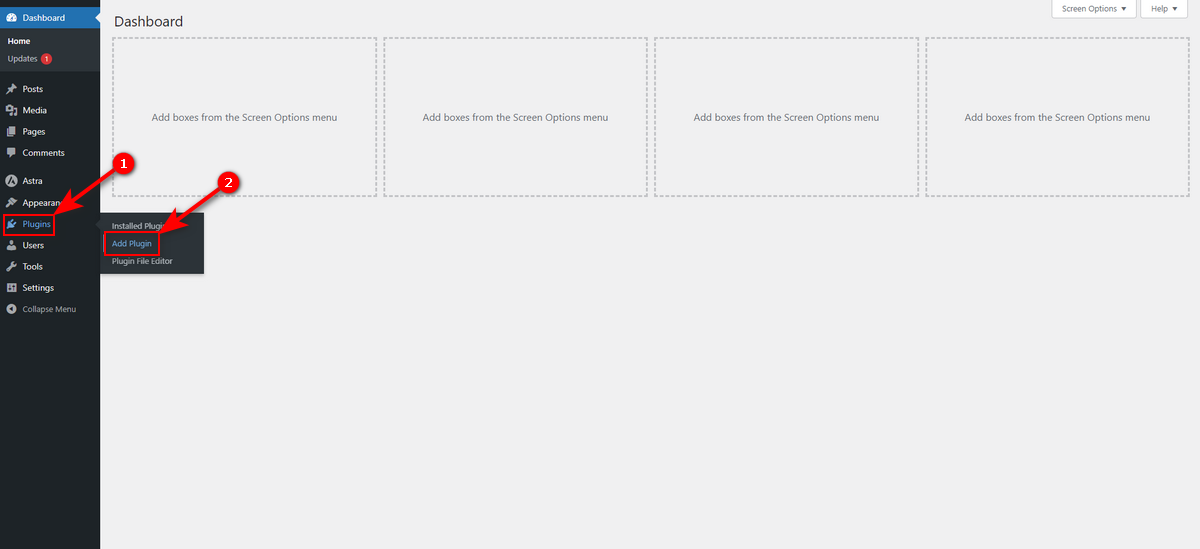
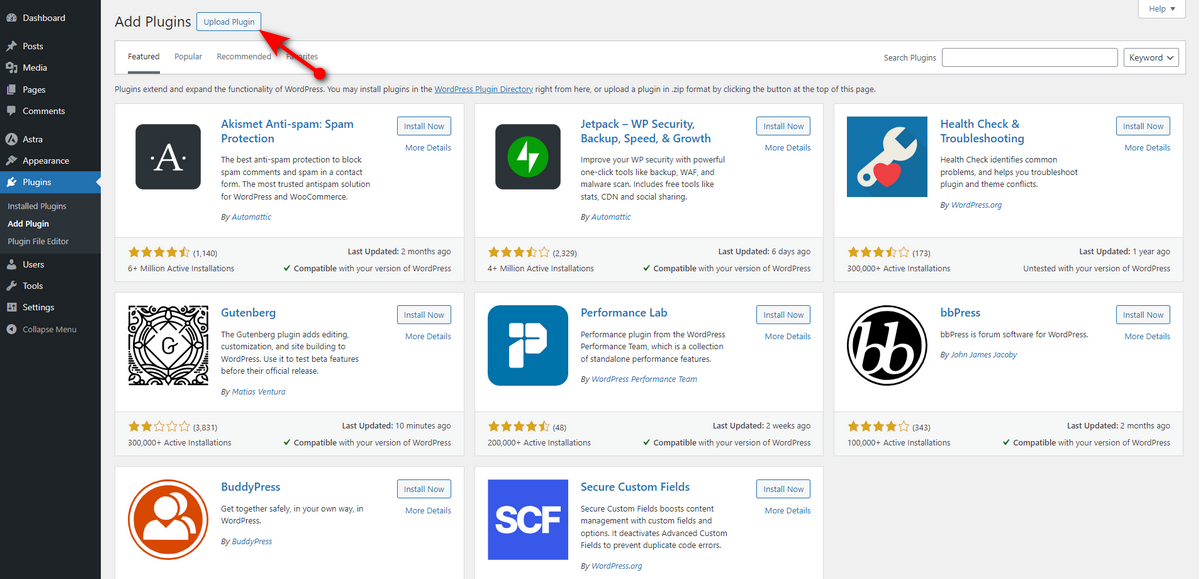
- Now, click Upload Plugin button.
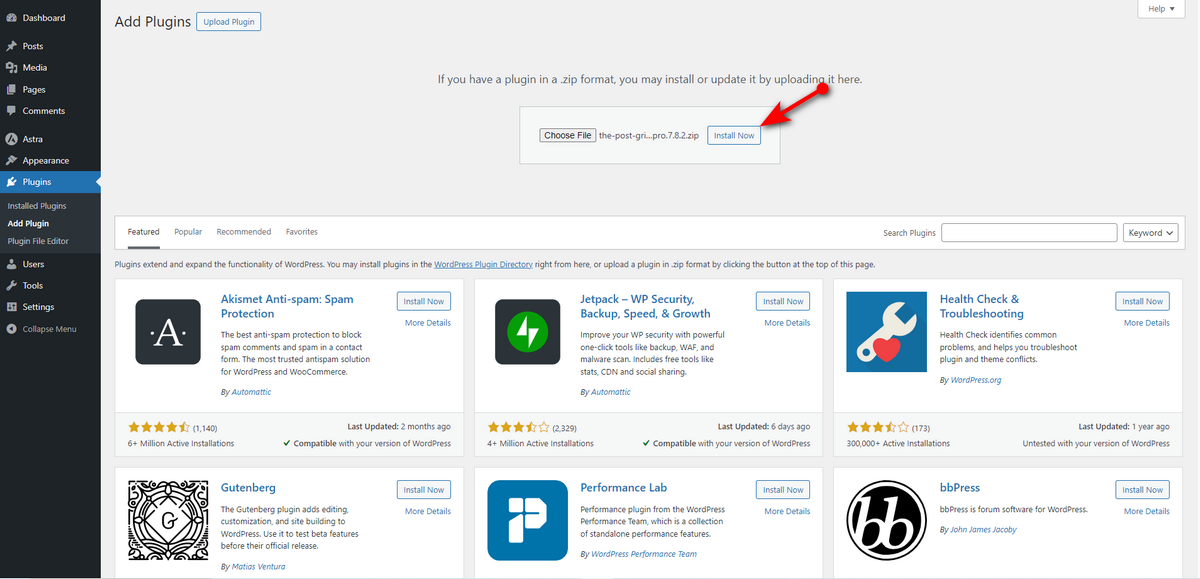
- Next, click the Choose File button and upload the plugin’s pro version zip file, which you received via email or downloaded directly from the official website.

- At this point, tap the Install Now button and wait for the process to complete.
- Then, click the Activate Plugin button.
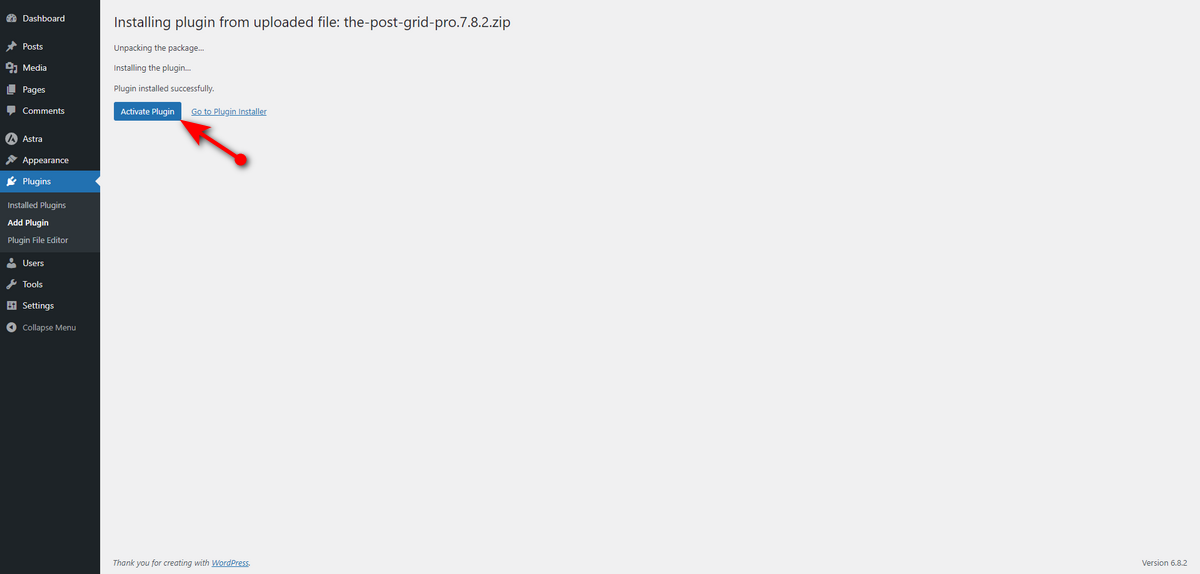
That’s how you install and activate the pro version of the plugin. However, it won’t work until you install the free version of this plugin from the WordPress plugin repository. So, make sure to install the free version and then follow the steps below.
Build Your Fashion Blog Homepage
Before creating a fashion blog homepage with the Post Grid plugin, you’ll need to make some dummy or actual blog posts so that you can view them inside the blog layout while designing the homepage. So, make some posts.
Next, navigate to Pages >> Add Page from your WordPress Admin Dashboard.
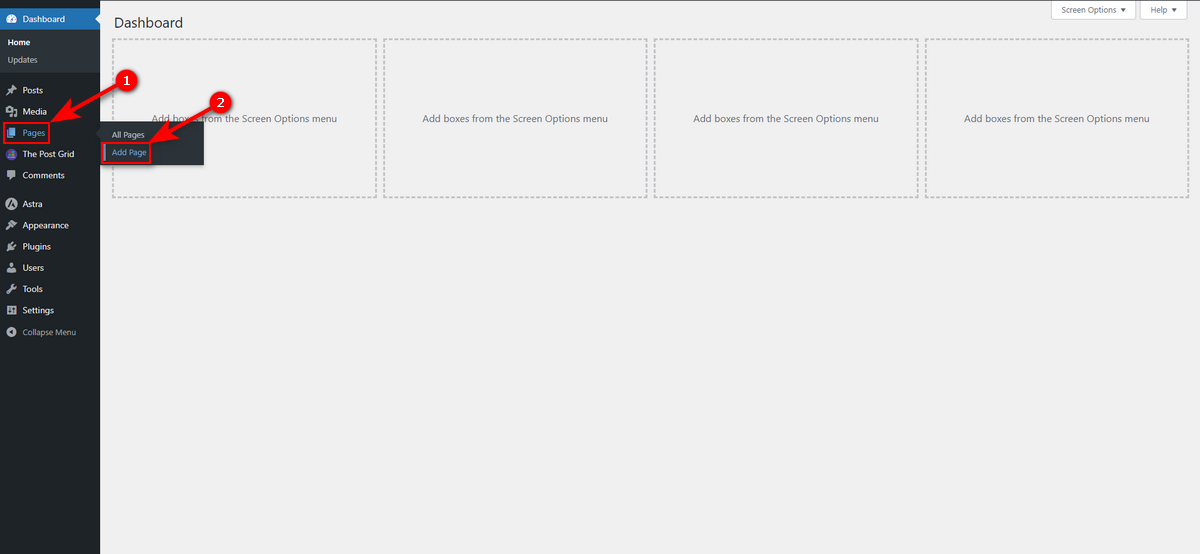
Now, write your page title and click The Post Grid button on the top left.
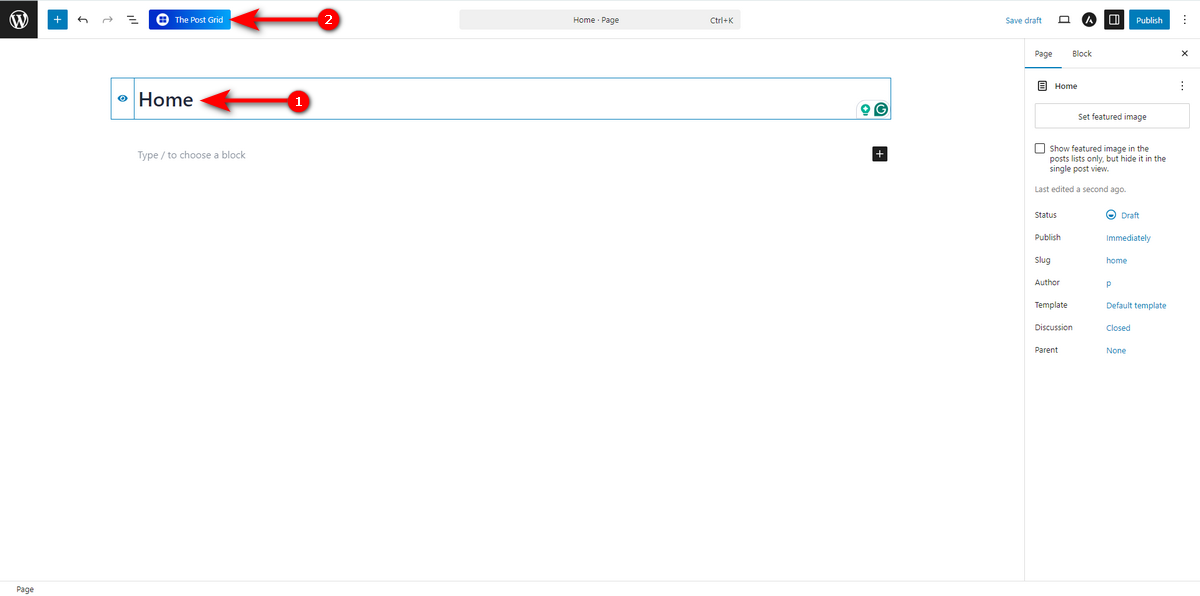
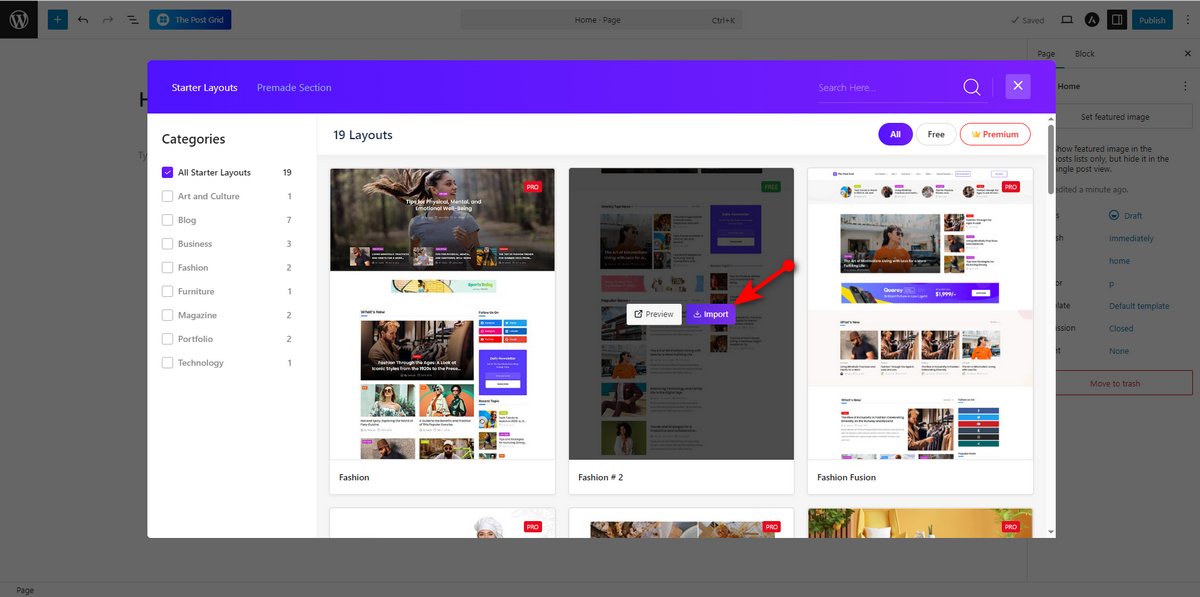
You’ll see a pop-up with pre-made layouts and sections. Explore fashion layouts and click Import button of your preferred one.
This layout will be imported to the Gutenberg editor. You can click on a block and notice its settings on the right side.
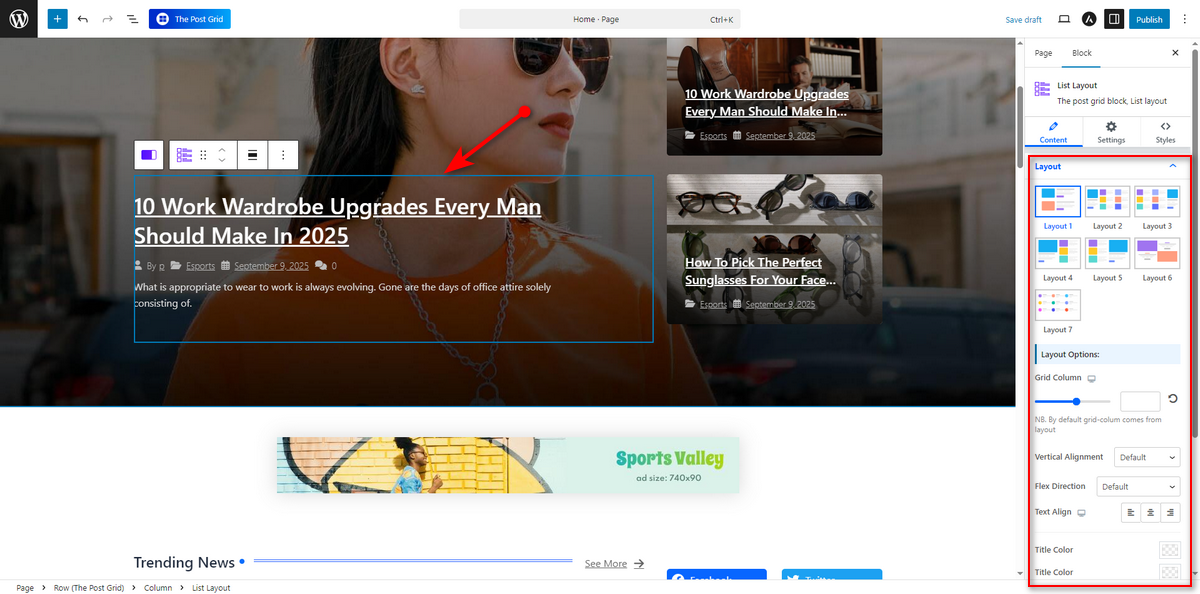
You can change the layout style of a block, modify alignment and text color, set the post number you want to display, showcase particular pages, and do much more stuff. We encourage you to read our documentation to learn more about this plugin.
Once you’re done with the editing, you can publish the homepage. That’s how you build a homepage for your fashion blog with the Post Grid plugin.
Step 8: Build Essential Fashion Blog Pages
Okay, you’ve crafted a homepage with your latest posts on display. But to transform your website from a simple collection of articles into a professional and trustworthy brand, you need to build a few essential pages. Here are the must-have pages you need to create.
The About Page: This is the most crucial page after your homepage. Why? Because fashion is personal, and readers connect with people, not just faceless content.
Your About Page is where you sell yourself and your unique perspective. It’s your chance to turn a first-time visitor into a loyal follower.
The Contact Page: If you want to work with brands, get feedback from your readers, or receive press inquiries, you need to make it incredibly easy for people to reach you. A dedicated Contact Page removes all friction.
Keep this page clean and simple. Your goal is function over flair. At a minimum, include:
- A simple contact form for sending messages directly.
- Your professional email address for direct inquiries.
- Links to your most active social media profiles.
The Blog Page: This might seem obvious, but you need a central, organized hub where all your articles live. While your homepage might feature your latest or most popular posts, the Blog Page should be an archive that visitors can browse easily.
It should be clean, easy to navigate, and showcase your content attractively, much like the layouts you can create with The Post Grid plugin.
You can set your main blog feed as your homepage or create a separate page for it.
The Privacy Policy Page: The Privacy Policy page is a non-negotiable one. It’s legally required in many regions if you collect any user data (which you will through comments, contact forms, and analytics).
More importantly, it shows your audience that you are a professional who respects their privacy. This builds immense trust. So build it.
Step 9: Design Your Content Ecosystem, Not Just Blog Posts
You’ve built the house, now it’s time to make the roads that lead to it. Writing a blog post and hitting ‘publish’ is just the beginning, not the end, of your work. The mistake many new bloggers make is hoping that people will magically find their new article.
Successful bloggers think bigger. They treat each blog post as the powerful centerpiece of a larger content ecosystem designed to maximize reach and engagement. This is how you move from being just a blogger to a savvy content creator.
Introduce the Pillar and Cluster Model
To do this effectively, use the “Pillar and Cluster” model. Think of your main blog post as the Pillar. All your other content, such as social media posts, videos, and newsletters, is in the Cluster.
The primary job of each cluster is to grab attention on other platforms and drive interested traffic back to your central Pillar post. This model ensures every single piece of content you create has a clear purpose and works together to grow your brand.
The Workflow in Action
Let’s see how this works with a practical example. Imagine you just wrote a fantastic, detailed blog post. Don’t just share the link; repurpose it.
- Pillar (Blog Post): Your in-depth article is titled, “10 Ways to Style a White Button-Down Shirt.” It’s packed with high-quality photos and detailed descriptions.
- Video Content (Reel/TikTok/Short): Create a high-energy, 30-second video showing 5 of the looks in quick succession.
- Pinterest Content: Create 5-10 unique Idea Pins and static Pins, each showcasing one look from the blog post.
- Instagram Carousel: Showcase your top 5 photos in a swipeable carousel. Use the caption to provide quick style tips for each look.
- Newsletter: Don’t just send an email with a link. Tease your audience and provide exclusive value. Send an email with the subject line, “My best-kept secret for styling a classic shirt.”
Inside, offer 3 exclusive styling tips not featured in the post, then guide them to the full article for the complete list.
See how one core idea fuels an entire week’s worth of strategic content? You’re not creating more work; you’re working smarter.
Utilize AI as Your Assistant
Producing a lot of content alone will be challenging. This is where AI tools come to the rescue. You can utilize several AI tools within the Post Grid plugin and start writing fashion blog posts with minimal effort and supervision.
Here’s how to use it to save hours of work:
- Brainstorm 50 blog titles for your niche: If you’re stuck, give the AI a prompt like, “Act as a fashion blogger and brainstorm 50 blog post titles for a blog about minimalist corporate capsule wardrobes for plus-size women.” You’ll never run out of ideas again.
- Create outlines: Once you have a title, ask the AI to “create a detailed outline for a blog post titled ’10 Ways to Style a White Button-Down Shirt.’ This gives you a solid structure to start writing and ensures you don’t miss any key points.
- Draft social media captions: This is a massive time-saver. Feed the AI your blog post’s main points and ask it to “write five engaging Instagram captions and three Pinterest descriptions” based on the content. Tweak them to match your unique voice, and you’re ready to post.
Step 10: Promote Your Fashion Blog
At this stage, you need to work on promoting it to gain visitors and eventually earn some money. But the question is, what strategies should you follow to promote your fashion website? Let us help you with that as you keep reading further.
SEO (Search Engine Optimization) is the most popular and widely used strategy that many bloggers utilize to promote their blogs. You can implement this on your fashion blog. Just research some keywords related to your topic – which you’ve already done during niche selection.
Finalize those keywords, create topic clusters, and develop a content calendar. Then, gradually create posts, perform on-page SEO, and publish your blog. Create at least 15-20 blog posts within two months before inviting Google to discover your blog through robots.txt.
Keep posting high-quality content that solves problems of your targeted readers. Once you gain some visitors on your blog, start doing off-page SEO.
SMM (Social Media Marketing): This is a part of off-page SEO. You can start promoting your blogs on diverse social media platforms to attract some visitors immediately.
We recommend you create pages and groups related to your niche on Facebook, Pinterest, Instagram, Twitter, etc. Then, regularly share your blog posts on those groups, alongside inviting others to like your pages and join your groups.
Email Marketing: It’s one of the greatest digital marketing strategies. Email marketing enables you to reach your targeted customers and prompt them to take action.
If you start collecting readers’ email addresses through a newsletter sign-up form on your fashion blog, you can later use these addresses to send a small piece of new blog content right after publishing that content on your website. Doing so will help you immediately gain visitors to your latest blog post.
Guest Blogging: Guest blogging is an excellent way to reach new audiences. When you publish posts on some external publications, you explore untapped audiences and generate broad awareness. Eventually, you bring visitors to your blog who later become loyal fans.
Step 11: Monetize Your Fashion Blog
So, your fashion blog constantly gets a considerable number of visitors. It’s time to capitalize on this web traffic and start earning some cash. Here are a few ways to follow to make some money with your fashion website.
Display Ads: You can earn money through your blog by displaying ads from diverse advertising networks, such as Google AdSense, Monetag, etc.
Affiliate Marketing: This is a lucrative way to earn money while blogging. You can join some popular affiliate marketing platforms.
Then, promote their fashion items through your website and earn a referral commission when your audience purchases a product after clicking on your affiliate link.
Promote Branded or Exclusive Content: You can collaborate with brands, agencies, fashion startups, and other partners to make engaging content.
Then, you can charge those partners to promote their content through your blog (of course, you need to have a good number of visitors to charge other brands)
Sell Branded Swag: Once you’ve built a loyal audience for your fashion blog, you can create branded swag to sell. For instance, you can utilize various print-on-demand services to create printed items like t-shirts, mugs, and jewelry, and sell them on your website.
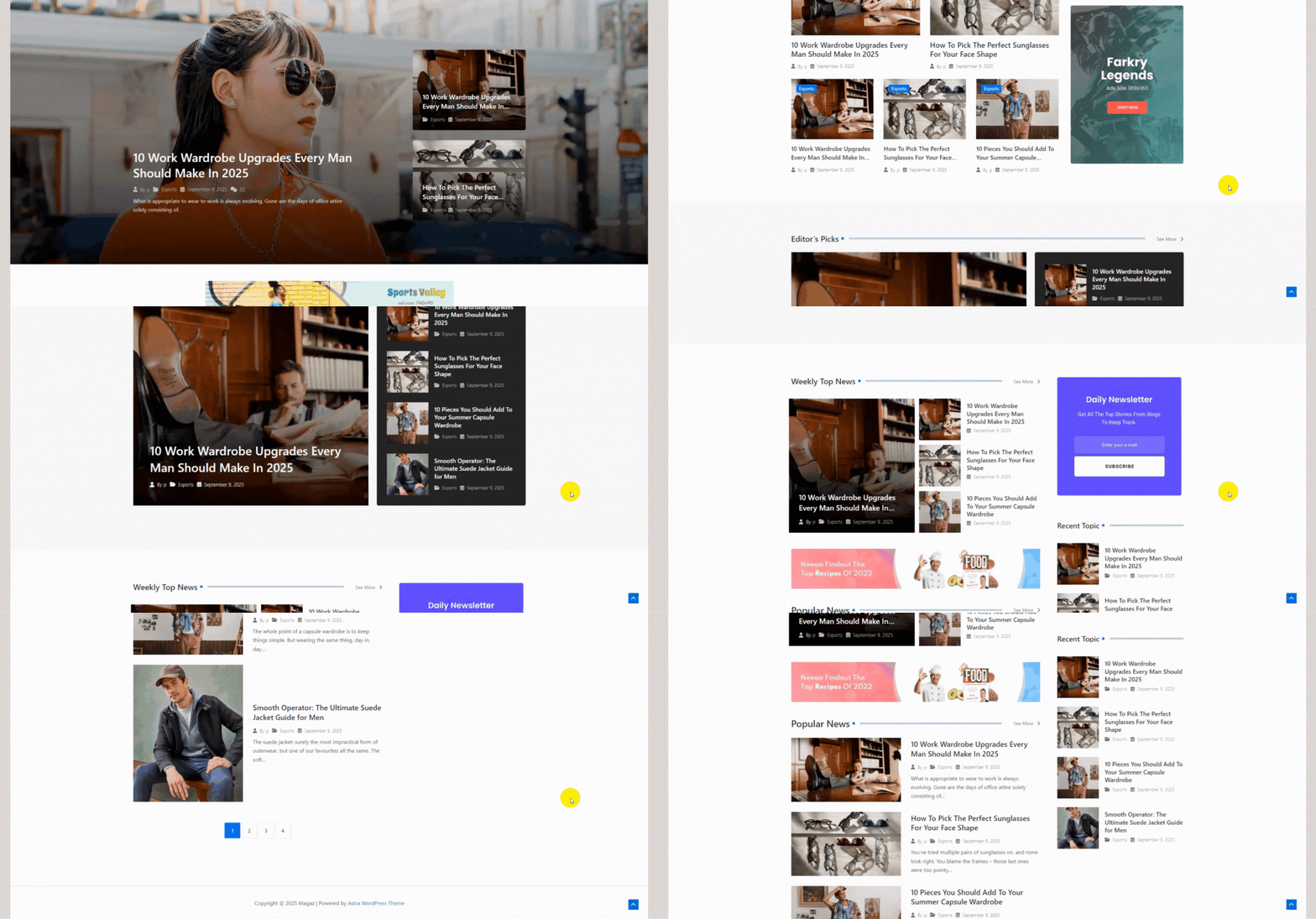
That’s all the steps to follow to create, promote and monetize a fashion blog. So, follow them and build a fashion website like the animation below.
Bonus: Best Fashion Blog Examples for Design Ideas
To help you get inspired, we’ve analyzed five of the best fashion blogs out there.
Don’t just copy them; inspect the principles that make them successful and see how you can apply those lessons to your own unique vision.
1. Hello Fashion

Founded by Christine Andrew, Hello Fashion is a masterclass in creating a bright, clean, and shoppable lifestyle brand.
The blog’s design immediately communicates a feeling of aspirational but accessible luxury. It utilizes a tremendous amount of white space, which allows its high-quality, professional photography to truly stand out.
Its navigation is incredibly intuitive. What Hello Fashion does exceptionally well is seamlessly integrate commerce. You’ll find shoppable carousels and widgets embedded naturally within articles, making it easy for readers to purchase the items they see.
Key Design Takeaway: Prioritize high-resolution, professional photography above all else. A clean, minimalist design with clear navigation creates a premium user experience and makes your content and any products you’re promoting the undeniable star of the show.
2. The Blonde Salad
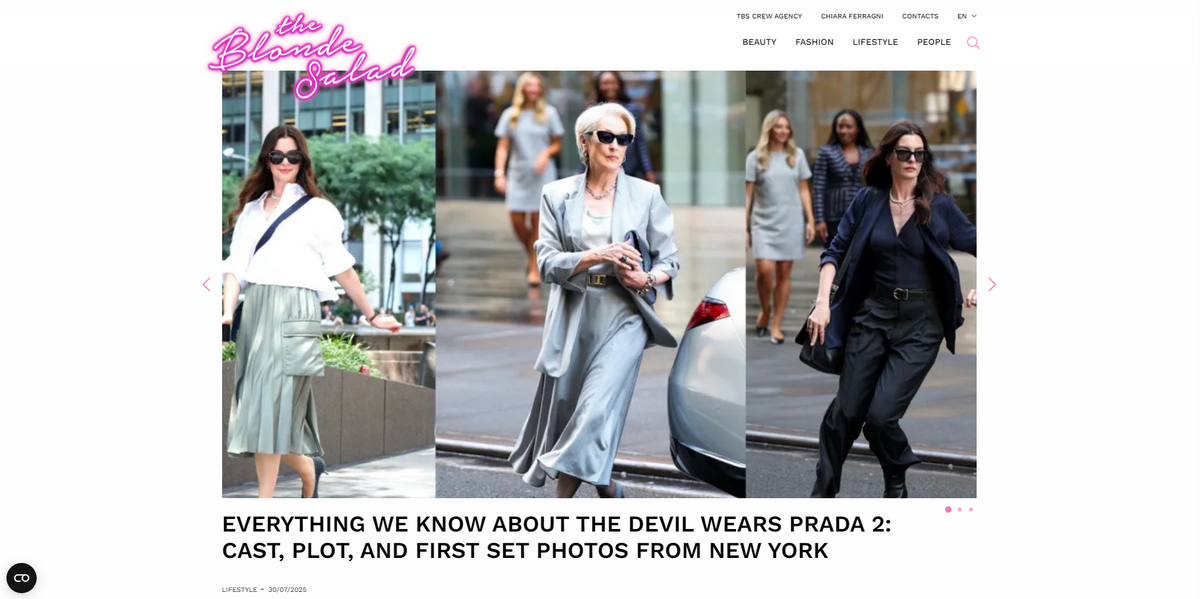
The Blonde Salad, created by the globally renowned Chiara Ferragni, is the ultimate example of a personal blog. Its design is bold, editorial, and unapologetically high-fashion.
It uses strong, oversized typography, artistic photo layouts, and a sleek, modern interface. The content has expanded far beyond Chiara’s personal style to include a team of writers covering fashion trends, beauty news, and talent spotlights.
Key Design Takeaway: Don’t be afraid to be bold. A strong visual identity with unique typography and an editorial layout can elevate your brand and position you as an authority.
3. Sincerely Jules
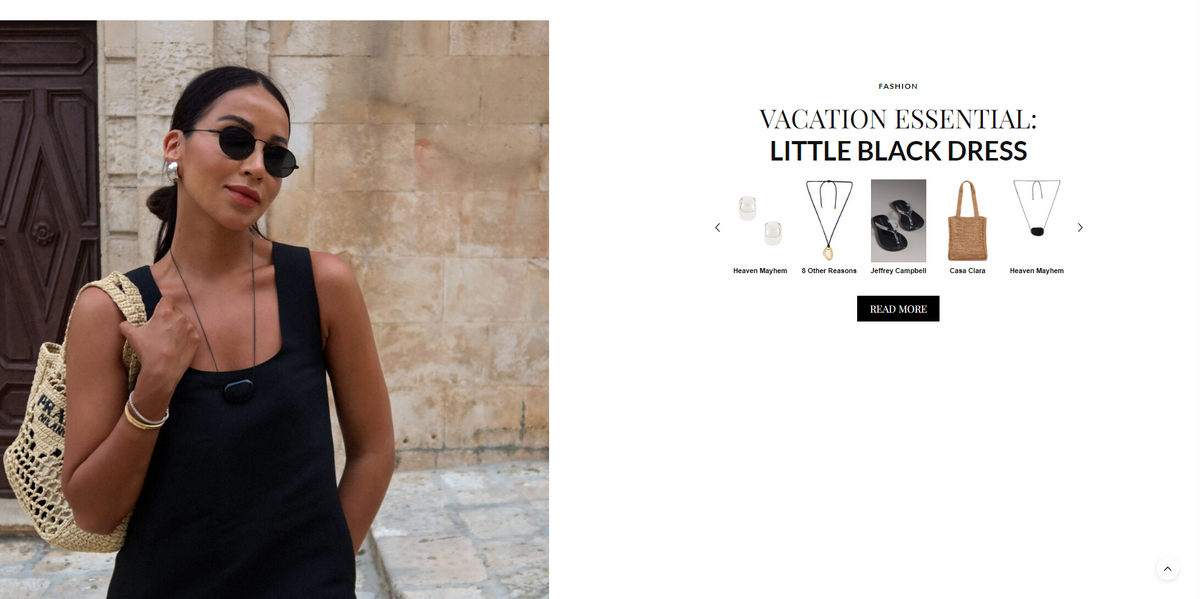
Julie Sariñana’s Sincerely Jules perfectly captures the essence of a California-cool, travel-infused aesthetic. The blog’s design is a direct reflection of her personal brand: effortless, aspirational, and authentic.
Unlike the magazine feel of other blogs, Sincerely Jules retains a more personal, diary-like structure.
The photography is a standout feature that introduces the reader to the exotic locations Julie visits.
The monetization is cleverly integrated through the SHOPPE menu that leads to her own successful clothing line. The design prioritizes her voice and visual storytelling, making visitors feel like they are following a personal journey.
Key Design Takeaway: A consistent visual aesthetic is your most powerful branding tool. By developing a signature photo editing style and a consistent tone, you can create an immersive and memorable experience.
4. WeWoreWhat
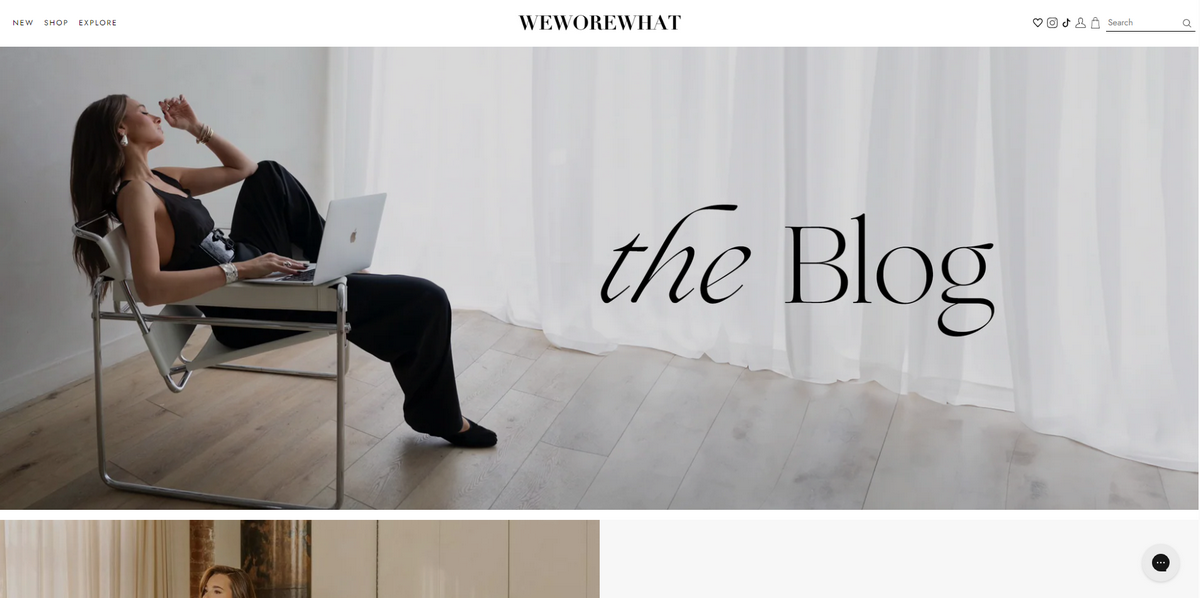
WeWoreWhat, founded by Danielle Bernstein, is a prime example of a blog that has successfully transitioned into a commerce-first platform.
While it began as a street style blog, the website now functions primarily as a sophisticated storefront for her namesake fashion brand.
Its design is modern, minimalist, and highly focused on the user’s shopping experience. It features clean grid layouts, high-quality product imagery, and an intuitive e-commerce interface.
The blog content still exists, but it works as a powerful form of content marketing to support the products.
This shift from content creator to brand owner is brilliantly reflected in a site design that prioritizes sales without completely abandoning its content roots.
Key Design Takeaway: Think about your long-term goals. If launching a product line is your dream, design your blog from the start with e-commerce in mind.
5. The Fashion Guitar
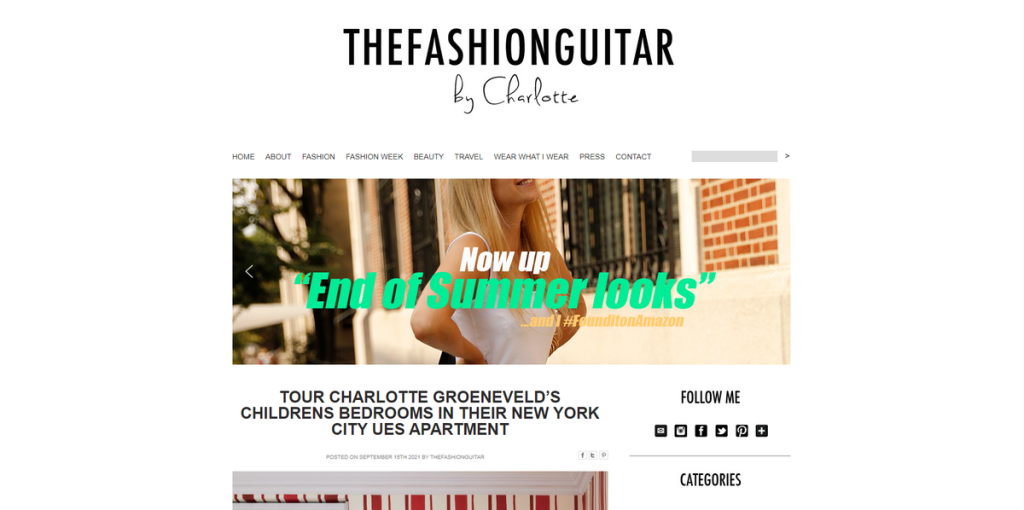
Created by Charlotte Groeneveld, The Fashion Guitar is a gorgeous destination for high-fashion and luxury style. The site’s design is chic and minimalist, perfectly reflecting the sophisticated content.
It proves that in the world of luxury, less is often more. The layout is immaculate, allowing the stunning, editorial-quality photography and the designer clothing to command full attention.
Charlotte masterfully blends her high-fashion focus with her life as a mother in New York, creating a unique niche that feels both aspirational and relatable.
The blog’s design uses refined typography and a simple color palette, making it the perfect portfolio for attracting collaborations with top-tier luxury brands.
Key Design Takeaway: Your blog’s design should match the market you want to attract. For a high-end or luxury niche, a minimalist, elegant design with an emphasis on stunning visuals conveys professionalism and sophistication.
Frequently Asked Questions (FAQs)
Do Fashion Bloggers Make Money?
Yes, successful fashion bloggers absolutely make money through multiple income streams. The most common methods include affiliate marketing, sponsored posts with brands, selling their own products, and display advertising.
How Long Does It Take to Make $1000 Per Month Blogging?
There is no exact timeline, as success depends on your niche, content quality, and marketing efforts. However, most dedicated bloggers who consistently publish valuable content and promote it effectively can expect to reach the $1000 per month milestone within 12 to 24 months..
How Much Money is Required to Start a Blog?
It can cost you anywhere from $50 to over $100. In essence, it depends on your requirements. If you need a simple fashion blog, you won’t have to spend much money. You’ll pay a significant amount if you want to build a complex e-commerce store alongside running a fashion blog.
Final Thoughts
There you have all the information regarding how to start a fashion blog. Here’s a rundown of the entire process. First, select a niche. Then, research your audience and competitors. Next, choose a domain and connect it to a host.
Now, select a fashion blog builder, install a theme, install a necessary plugin, build a homepage and other pages, design a content system, promote your blog, and finally, implement some monetization methods.
That’s everything you need to do. This blog will serve as a valuable resource for you when creating a fashion blog.
Looking to expand your fashion journey? Check out our guide on Online Clothing Business Ideas to explore profitable opportunities in the e-commerce space.