
On This Page
Starting a directory website is one of the most accessible ways to build a profitable online business. The barrier to entry is low, the revenue potential is real, and the business model is proven. But before you write a single line of code or install your first plugin, you need to answer the most important question: Should you build a general directory or a niche directory?
This decision will shape everything that follows—your marketing strategy, monetization options, competition level, and ultimately, your success or failure. In this guide, you’ll discover exactly how each type works, their distinct advantages and disadvantages, and a clear framework to help you make the right choice for your situation.
What’s the Actual Difference?
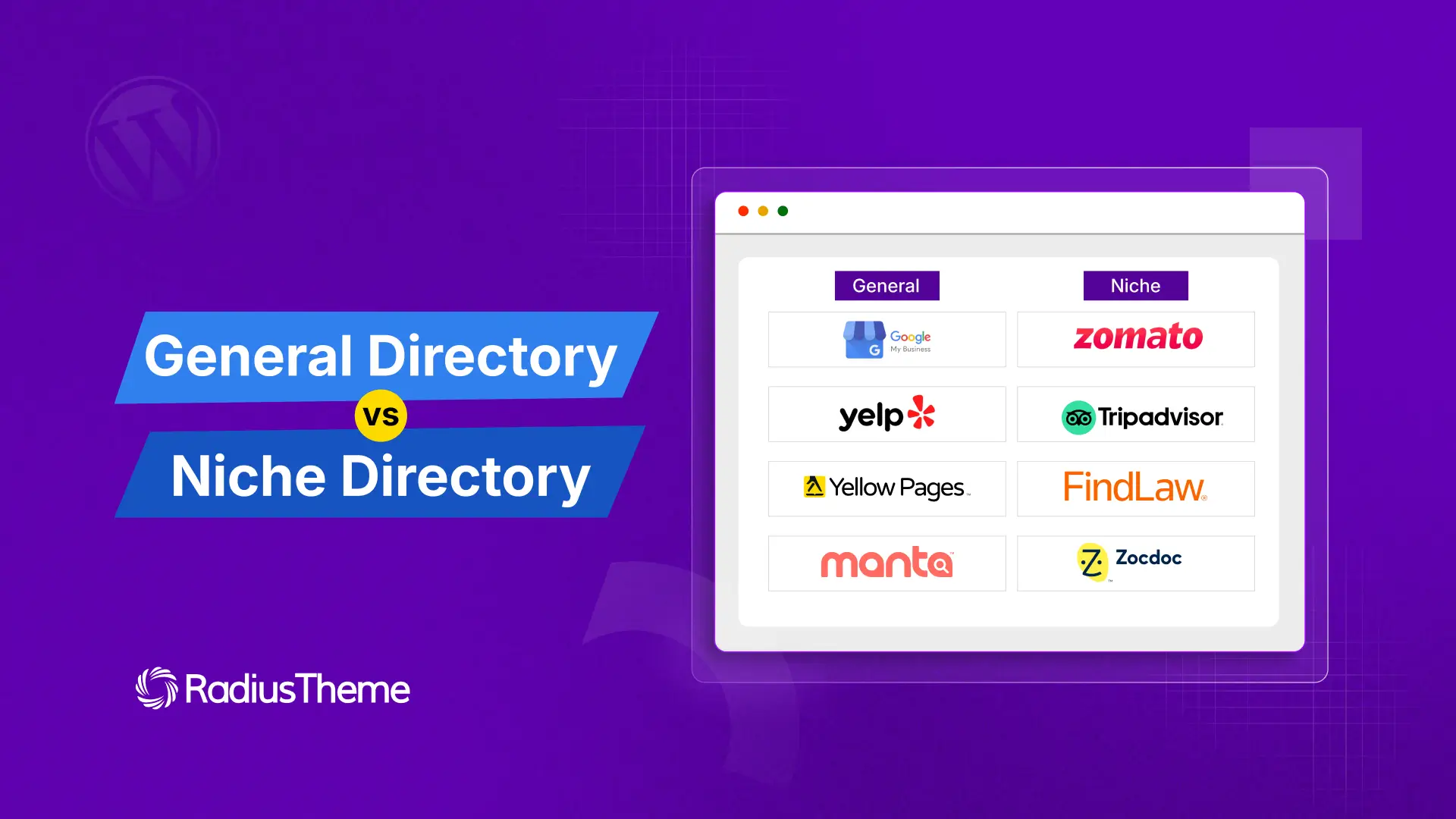
General directory casts a wide net. Think of platforms like Yelp, Yellow Pages, or Foursquare. These directories accept listings across virtually every industry and location, organizing businesses into broad categories like “Restaurants,” “Healthcare,” or “Professional Services.”
Niche directory takes the opposite approach. It focuses exclusively on a specific industry, profession, location, or interest. Examples include FindLaw (legal professionals), TherapyDen (mental health practitioners), or directories dedicated to vegan restaurants in a specific city.
👉 Good Read: Online Directory Business Model
Here’s a simple way to think about it: general directories are department stores attempting to serve everyone, while niche directories are specialty boutiques that do one thing exceptionally well.
| Aspect | General Directory | Niche Directory |
|---|---|---|
| Audience | Broad, diverse | Highly targeted |
| Competition | High (competing with established giants) | Lower (specialized focus) |
| Traffic Potential | Higher volume, lower intent | Lower volume, higher intent |
| Conversion Rate | Typically 1-2% | Can reach 4-5% or higher |
| Monetization | Harder to charge premium rates | Easier to justify premium pricing |
| Content Expertise | Requires breadth of knowledge | Requires depth of knowledge |
| SEO Difficulty | Extremely competitive | More achievable rankings |
The Case for Building a Niche Directory
The data tells a compelling story. Industry-specific directories generate approximately 3.2 times more qualified leads than general directories, and visitor-to-lead conversion rates on niche platforms average 4.7% compared to just 1.3% on general business directories.
Why such a dramatic difference? It comes down to user intent. When someone visits a niche directory, they’re on a mission. They know exactly what they’re looking for and they’re ready to take action. Contrast this with general directory visitors who are often casually browsing without a specific goal.
The advantages of going niche include:
Focused marketing becomes dramatically easier. Instead of trying to reach everyone, you know exactly who your audience is and where to find them. A directory for wedding photographers can advertise on wedding planning forums, partner with bridal magazines, and target engagement-related keywords. This precision reduces your marketing costs while increasing effectiveness.
Premium pricing becomes justifiable. When you’re the go-to resource for a specific industry, businesses will pay more to be featured. A boutique financial advisory firm that reallocated their directory budget from 12 general directories to just four finance-specific platforms reported a 340% increase in qualified inquiries within six months.
Authority builds faster. You become known as the expert resource in your space, which creates a flywheel effect—more businesses want to be listed, more users visit, and your reputation grows.
SEO gets more achievable. Trying to rank for “business directory” is nearly impossible. But ranking for “mental health therapist directory [city name]” or “vegan restaurant directory [region]” is realistic, especially when you’re building genuine authority in that vertical.
The Case for Building a General Directory
Larger addressable market means more potential listings and more potential revenue if you achieve scale. General directories like Yelp generate over $1.3 billion annually because their massive scope creates enormous advertising inventory.
Diversified revenue streams protect you from industry-specific downturns. If you have listings across dozens of industries, a downturn in one sector won’t devastate your business.
More monetization opportunities through broad advertising appeal. National brands want to reach diverse audiences, and general directories provide that reach.
However, the honest reality is that building a successful general directory in 2025 is extraordinarily difficult for new entrants. The incumbents have massive head starts with brand recognition, domain authority, and user bases that would take years to replicate.
The 5-Step Framework for Making Your Decision
Before you commit either way, run your idea through this validation framework:
Step 1: Passion and Interest Check
Can you genuinely maintain interest in this space for 3-5 years? Building a successful directory isn’t a quick flip—it requires sustained effort. If you’re passionate about the niche, you’ll understand your users better, create more valuable content, and push through the inevitable difficult periods.
Step 2: Problem Validation
Does your directory solve a real problem? People won’t use a directory they don’t need. Look for gaps in existing solutions. Are people complaining on Reddit or Quora about finding specific services? Are existing directories outdated, poorly designed, or missing key features?
Step 3: Monetization Reality
Can you actually make money from this? A great idea without monetization is just a hobby. Research whether businesses in your chosen niche pay for advertising, premium listings, or lead generation. Some industries have strong willingness to pay; others don’t.
Step 4: Competition Analysis
Is your niche too saturated, or is it wide open for a reason? High competition indicates proven demand but makes entry harder. No competition might mean no market exists. The sweet spot is moderate competition with room for a better solution.
Step 5: Unfair Advantage Assessment
What do you bring that competitors don’t? This could be industry connections, technical skills, existing audience, or simply a willingness to outwork everyone else. The more leverage you have, the faster you’ll gain traction.
Monetization Strategies That Work for Each Type
Understanding how you’ll make money should inform your directory choice. Different directory types lend themselves to different revenue models.
For Niche Directories:
Premium listings work exceptionally well because businesses see clear value in standing out within a targeted audience. Tiered subscription models (basic free, premium paid, featured ultra-premium) generate recurring revenue while maintaining a free tier that attracts initial listings.
Lead generation represents the highest-margin opportunity. When you connect businesses with highly qualified prospects, you can charge per lead or take a percentage of resulting transactions.
Sponsored content and native advertising perform well because the audience is specific enough to make targeting worthwhile for advertisers.
For General Directories:
Display advertising through networks like Google AdSense works better here because you have more diverse traffic. The CPMs are lower, but the volume can compensate.
Transaction fees make sense if you can insert yourself into the buying process—think booking fees, reservation charges, or referral percentages.
Data licensing becomes possible at scale. Aggregated, anonymized data about business trends across industries has value to researchers and enterprises.
The Hybrid Approach: Start Niche, Expand Later
Here’s a strategy that combines the best of both worlds: launch a niche directory in a specific geographic area or industry vertical, then expand once you’ve established authority and generated revenue.
This approach gives you the focus needed to break through initially while leaving the door open for growth. A directory for pet services in Austin could eventually become a directory for pet services across Texas, then nationally. Alternatively, a local general directory could work in smaller markets where national giants haven’t fully penetrated.
The key is starting with something small enough to dominate but large enough to sustain a business.
Practical Tips for Getting Started
Once you’ve made your decision, here are the actionable next steps:
If you’re going niche, select your focus based on the intersection of three factors: your knowledge or passion, market demand (use Google Trends and keyword research), and monetization potential (research what competitors charge).
If you’re going general, choose a geographic focus rather than trying to go global immediately. Local general directories can still work because you’re competing on geographic relevance rather than pure scale.
For either approach, you’ll need to build the actual website. If you’re using WordPress, there are several plugins and themes designed specifically for directory sites. Check out our guide on How to Create a Free Directory Website in WordPress to get started with the technical implementation.
Focus obsessively on getting your first 50-100 high-quality listings before worrying about monetization. A directory without listings has no value to users, and users are what attract more listings. This creates a chicken-and-egg problem that you solve through manual outreach, offering free listings initially, and potentially seeding the directory with your own researched content.
Key Takeaways
The question of general versus niche isn’t just about preference—it’s about matching your resources, goals, and competitive advantages to the right approach.
Build a niche directory if: You have specific industry knowledge, limited marketing budget, want faster path to profitability, prefer to compete on quality over scale, or want to build genuine authority in a space.
Build a general directory if: You have significant capital to invest, strong technical and marketing teams, patience for a longer runway to profitability, or you’ve identified an underserved geographic market.
The data-driven verdict: For most solo founders and small teams, niche directories offer a significantly higher probability of success. The lower competition, higher conversion rates, and ability to charge premium prices make the economics more favorable, even with a smaller total addressable market.
The most successful directories aren’t just lists of businesses—they’re trusted resources that solve real problems for real users. Whether you choose general or niche, keep that principle at the center of everything you build.
Now it’s your turn. Evaluate your situation against the framework outlined above, make your choice, and start building. The directory market continues to grow, and there’s room for thoughtfully executed projects in virtually every vertical. The key is to start with clear direction and commit fully to your chosen path.