On This Page
Depop is both an online fashion marketplace and a social network, with an eCommerce site and mobile app. It enables users to interact while they sell, buy, and discover items easily.
Its Instagram-like feed enables users to follow each other as well as view, like, and share content. This interface attracts Gen Z and millennials as the platform’s top users. It boasts physical retail locations and offices in New York, Los Angeles, Sydney, and Milan.
TL;DR for the Depop Business Model
Depop is a social marketplace that combines eCommerce and community. Its Instagram-like interface attracts Gen Z and millennials, while fueling global appeal and rapid growth.
Key Points:
- Origins and Growth: Established in 2011 in Italy, relocated to London, and acquired by Etsy in 2021 for $1.625B; now has over 42M users worldwide.
- Value Proposition: Seeks to promote sustainability by facilitating buying and selling of secondhand, streetwear, and vintage fashion; all this on a mobile-first, community-driven platform.
- Revenue Streams: Generates revenue through transactions, advertising, platform, foreign exchange, and seller fees.
- Competition and Partnerships: Battles rivals like Poshmark and Grailed, while working with partners, such as Nest Commerce and Shippo to scale operations.
- SWOT and Marketing: Depop leverages loyal Gen Z users and unique inventory to combat fraud risks, fierce competition, and other challenges; it relies on AI-driven personalization, offline popups, and social media integration.
The platform thrives as a social network and marketplace. However, its long-term success depends on strengthening trust and broadening its user base.
Depop’s Story
Depop was founded in 2011 by Simon Beckerman in Roncade, Italy. He came up with the idea while working on his fashion and culture magazine, PIG. He envisioned a platform on which his readers could purchase the items they saw on the magazine.
Eventually, the idea developed into a digital flea market. The concept would allow users to buy and sell items online while controlling their creative presentation.
H-Farm, a business startup center supported the app’s initial development. Nana Bianca and Paolo Barberis provided the company’s seed investment. The company then relocated to London in 2012.
Depop quickly gained traction among Gen Z and millennials due to its Instagram-like experience. For 9 years since its inception, it reached over 15 million users across 150 countries.
This was before it was acquired by Etsy in 2021 for $1.625 billion. According to statistics, by 2023, their registered user count shot to 42 million from 30 million in 2021.
It has maintained its focus on sustainable fashion, young entrepreneurs, and community building. About 90% of its active users are under 26-years-old.
What Depop Does
Depop enables fashion enthusiasts to buy and sell clothing, shoes, and other fashion items. It manages its online peer-to-peer marketplace and gives sellers access to create virtual shops.
Its focus on social interactions, cultural fluidity, and sustainable consumption attracts young users. It popularizes second-hand fashion. The best-selling styles include streetwear, unique, vintage, and Y2K.
How Depop Operates
Depop enables its sellers to list items with their descriptions and prices. They can also manage their shops and promote their products. Typically, sellers on the platform compete to be the top social fashion influencers.
On the other hand, buyers can use the platform to browse listings, buy items, and interact with sellers. The platform provides the infrastructure for communication and transactions. It also offers shipping options that ease logistics for sellers.
Depop’s Mission Statement
Depop’s mission is to make fashion circular, promoting a community-centered fashion network that is kinder to the people and planet, and empowering the next generation to transform fashion.
This mission stresses sustainability and community as tools to change fashion shopping and interaction. It achieves this by promoting the sale of secondhand and unique clothing.
The mission also aims at extending clothing life, minimizing waste, and empowering a community of young entrepreneurs. The company is committed to developing the most progressive and diverse fashion hub.
Depop Business Model Canvas

The Depop business model is centered on P2P selling, social commerce, community emphasis, and creator empowerment. Here is a deep dive into its business model.
Depop’s Value Proposition
The platform focuses on creating a fashion marketplace with an eCommerce-social media balance. Here are its value propositions:
- Its social shopping experience is excellent, creating a community that offers style inspiration. It allows users to follow each other while liking, sharing, and engaging with fashion content.
- Depop has a culture of sustainability through the promotion of pre-owned clothing. This appeals to eco-conscious consumers averse to fashion consumption.
- Buyers often discover unique vintage clothing on the platform. On the other hand, sellers can monetize wardrobe items they don’t need.
- The platform boasts an intuitive and mobile-first interface. Users can list, browse, and buy items easily, which increases engagement and accessibility.
Customer Segments
Depop features several customer segments with distinct features. They include the following:
- Fashion enthusiasts: Various people use the platform to find stylish and unique fashion items. They value vintage items, handmade goods, and personal expression in their fashion choices.
- Independent sellers: Some individuals come seeking to build online businesses with direct-to-consumer sales. This segment is primarily made of young entrepreneurs often operating side-hustles.
- Vintage and secondhand shoppers: This core segment is made of hunters of vintage and unique secondhand items. Some of them are eco-conscious consumers who like the reuse of elegant clothes.
Depop’s Channels
Depop has a few communication channels that connect the company to its users. They include the following:
- Online request form on the Depop website
- Email address at support@depop.com
- Direct messaging on social media accounts like X, Facebook, and Instagram
- In-app support through the Help Center on Depop app
Key Features and Benefits
Depop is a peer-to-peer online marketplace with various excellent features and benefits. They include the following:
- Community-driven experience: The platform enhances interaction through various social features. These include direct messages, following favorite sellers, and liking items.
- Monetization and revenue: Users get to make extra cash casually or build stable clothes selling businesses.
- AI powered listing assistance: The platform uses AI to lift descriptions and attributes from images that users upload. This greatly streamlines the listing process.
- Enhanced visibility tools: Sellers have the chance to boost the visibility of their listings on featured sections and search results.
- Integrated shipping and payment: The platform provides shipping labels and helps users hold payments until the buyers confirm receipt of item.
- Mobile-first design: The Depop mobile app interface is excellent and increases user friendliness. It also increases accessibility and user engagement.
- Sustainable fashion: The platform encourages a circular economy via the listing of pre-owned fashion items. This aligns with the increasing demand for environmentally friendly fashion.
How Depop Generates Revenue

The platform makes money through a few channels with two main ones.
- Transaction fees: This is one of the primary revenue streams of Depop. The platform charges transaction fees to process all payments. The amount depends on the location, with American users paying 2.9% plus $0.30 against UK’s 2.9% plus 30 pounds.
- Platform fees: Depop requires a flat rate of 10% of the cost of all sales. The calculation price includes the selling price and shipping costs.
- Foreign exchange fees: The platform has users transacting across 150+ countries. This points to significant revenue earned through foreign currency exchange.
- Foreign seller fees: All sellers from outside of the UK and US pay 10% of the item price. The shipping costs are also included if they don’t use a Depop shipping label.
- Advertising: Sellers who want to stand out can pay to advertise their items. There are many potential buyers to target with most platform sales coming from existing buyers.
Cost Structure
Depop incurs different costs while running its operations. Here are these costs:
- Platform and tech maintenance: The platform runs on various maintenance efforts, such as cybersecurity, cloud infrastructure, and software development.
- Customer support: The customer care employees are crucial for the operation of the company. Their pay and equipment makes up a significant part of its costs.
- Marketing and user acquisition: Programs like digital advertising, promotional campaigns, and referral efforts bring more business. The result is Depop’s tens millions of users.
Competitors
There are different alternatives and competitors who offer a few similar and distinct features. They include the following:
- Poshmark: This is a social marketplace listed on NASDAQ. It utilizes the reach, ease, and scale of eCommerce to enhance the physical shopping experience.
- Tradesy: This women-focused platform enables its users to buy and sell or trade their closet items. It simplifies packaging, shipping, and returns.
- Rebag: This New York-based fashion eCommerce startup is go-to place for luxury and designer handbags. The platform purchases designer handbags from its users and partners with stylists.
- GoTrendier: This is a new and used clothing and accessories marketplace.
- Grailed: This platform avails high-quality affordable men’s clothing. It provides elegant fashion options for around half the retail prices.
- Wallapop: This is the go-to marketplace for unique and second-hand goods.
Depop’s Key Partnerships
Depop has 3 main partnerships that enable its operations and development.
- Shippo: This is its largest partner, helping handle the technological aspects of its operations. It powers the backend checkout and shipping processes.
- Nest Commerce: It’s Depop’s channel partner. It has helped the platform boost its user registrations. Nest Commerce mostly focuses on creative optimization and performance marketing.
- HV Capital: The company has provided strategic support and massive investments. It has contributed to the platform’s growth and development through several investment rounds.
Depop’s SWOT Analysis

We now analyze the strengths, weaknesses, opportunities, and threats facing Depop.
Strengths
There are several strengths that contribute to the thriving of the platform. They include the following:
- Thriving community and social aspect: The platform focuses on having a strong community, which fosters loyalty and engagement. Its design mirrors social media, which encourages interaction through an exceptional shopping experience.
- Focus on Gen Z and sustainability: Its appeal to Gen Z gives it a considerable edge. This demographic appreciates sustainable fashion practices. Focusing on this demographic and sustainability gives Depop a loyal piece of the market.
- User friendly mobile platform: The Depop mobile app is very user-friendly. It has an intuitive and highly navigable design, perfect for a young demographic. Almost all of its transcations happen on mobile devices.
- Diverse and unique inventory: Depop has created a reputation of availing vintage and unique fashion pieces. It also gives a platform for designers of original and diverse clothing and apparel to sell their pieces.
- Empowerment of small businesses and individuals: The Gen Z and millennial user demographic of the platform has many enterprising students and aspiring entrepreneurs. These young people seek a way of earning through monetizing their wardrobe and creativity.
Weaknesses
There are a few weaknesses in Depop’s splendid armor. They include the following:
- Restricted target demographic: The platform’s heavy reliance on Gen Z is a potential weakness. It limits its brand recognition beyond this age group. It may also hamper wider market penetration, which is crucial for long-term growth.
- Potential for scams and fraud: The platform faces risks of scams through unreliable sellers and misrepresented items. Online marketplaces have been losing billions of dollars every year. Depop has to invest in robust buyer protection.
- Dispute resolution and customer service: Depop faces challenges with customer service satisfaction. User frustration can arise from lack of effective dispute resolution.
Opportunities
There are various untapped opportunities available for Depop. Here are some of them:
- Expanding into new markets: The platform can boost its appeal by targeting older users and venturing into new international markets. The global eCommerce market is in the trillions of dollars and this move could enable it to tap into this revenue.
- Increasing demand for sustainable and secondhand fashion: There is a rising interest in eco-friendly clothing among consumers. The sustainable fashion market is projected to hit $9 billion by 2033. The platform could take advantage of this by marketing itself aggressively appropriately.
- Developing strategic partnerships: Depop can form strategic alliances with brands and influencers that boost visibility and draw in new users. Partnerships can add the unique offerings the platform brings. They can also boost user interactions.
Threats
Although the Depop business is quite profitable, it faces various threats to its stability.
- Intense competition in the resale market: Platforms like Poshmark and Vinted present very fierce competition over users and sales. This competition can reduce Depop’s profit margins. New and innovative market entrants also complicate its market position.
- Consumer behavior and fashion trend changes: Changes in fashion trends and consumer behavior pose a grave threat to the platform. The platform primarily focuses on secondhand clothes, which attracts young people. Changes to such a trend would reduce transactions.
Depop’s Marketing Strategy
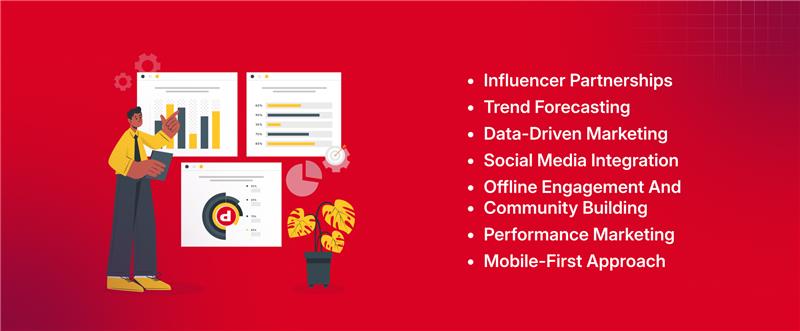
The company employs various marketing efforts to increase its visibility, awareness, users, engagement, and revenue. The combined marketing efforts form a solid marketing strategy. The tactics include the following:
Influencer Partnerships
The social media nature of Depop makes it perfect for influencer collaborations. They are crucial for driving traffic, sales, and brand visibility and popularity. An example by the platform is the ‘Your POV, Your Power’ campaign.
Trend Forecasting
This platform uses buyer habits to forecast future fashion trends. It also produces trend prediction reports that point out fashion shifts. These reports draw the attention and interest of prospective sellers and buyers.
Data-Driven Marketing
The company uses data to enhance recommendations and search results. The platform has an AI-powered autofill and recommendations. These push various trends and items relevant to user searches.
Social Media Integration
Depop relies on social platforms like Instagram for its marketing strategy. Sellers usually promote their personal stores and wares on these socials.
This creates a seamless connection between the eCommerce platform and social media. This is further enhanced by the app’s design, which mirrors various visual social media elements.
Offline Engagement and Community Building
Although the platform primarily operates online, it uses offline engagement to boost its performance. Pop-up stores and events like the ‘New York is on Depop’ campaign have been excellent for engagement.
The events and partnerships with entities like Brooklyn Museum expand the reach of Depop’s community. They also bridge the gap between the offline and online experience while encouraging community and sustainable fashion.
Performance Marketing
Depop utilizes performance marketing for efficient scaling and user acquisition. It generates deep engagement through YouTube and Snapchat’s Snap Ads and Story Ads. The multi-channel approach enables the company drive sales and wider reach.
Mobile-First Approach
The platform promotes its mobile app as its most basic sales channel. This caters to its primary demographic of young people who prefer browsing on mobile devices. The app’s appealing design encourages more active users to join the marketplace.
Frequently Asked Questions (FAQs)
It is safe to buy and sell on Depop provided users keep all communication and payments on the app. Users should avoid external payment or messaging methods. They should avoid emails claiming sales without in-app notifications.
If an item doesn’t match its description or fails to arrive, refunds are possible. Even if sellers indicate ‘no refunds’ in their bio, they’re obligated to refund in relevant cases. Buyers have up to 6 months to file a claim.
It is advisable for sellers to price their items close to the market value. They should include accurate descriptions and high-quality images to avoid disputes. Stock images from fast fashion sites like AliExpress are against the platform’s guidelines.
If a seller doesn’t ship an item within 7 days, the buyer should message them first. If they receive no reply within the next 3 days, the buyer can file a claim through Depop or PayPal.
Final Thoughts
Depop is a popular social marketplace for fashion. It allows users to discover, buy, and sell (often) secondhand clothes and accessories. Its operations and goals form an excellent balance for current and future profitability.
Our in-depth analysis into its business model explores all its important aspects. The framework on which it operates makes for an excellent case study. This guide should be perfect for anyone looking to learn or emulate the business model.