
On This Page
A car listing website looks simple from the outside: sellers post vehicles, buyers browse them. But behind that simple idea is a real business that can earn money every single day, even while you sleep. If you are an auto dealer or a seller thinking about launching your own platform, the first question is usually the same: how does a car listing website actually make money?
The short answer is that it earns from the listings and the traffic. You charge sellers to post or promote their cars, and you earn from the visitors who come to browse. The best part is that you can run several of these income streams at once.
This guide breaks down the eight proven ways a car listing website makes money, in plain language, and shows how a purpose-built tool like the CL Car listing WordPress theme lets you switch each one on without writing code.
Quick answer: how a car listing website makes money
A car listing website makes money by charging sellers and dealers to list and promote their vehicles, and by earning from site traffic. The most common revenue models are:
- Paid listings (charge per car posted)
- Featured ads (premium placement)
- Top ads (pin listings to the top)
- Bump-up ads (refresh a listing to the top)
- Membership plans (dealer packages)
- Subscriptions (recurring billing)
- Listing claims (verified dealer profiles)
- Commission marketplace (earn a cut per sale)
Most successful sites combine three or four of these. Let us look at each one and who it suits.
👉 Good Read: Car Listing Website Business Plan
Why a car listing website is a smart business
Before the models, it helps to know why this works. Car buyers research online before they ever visit a lot, so a well-run listing site sits exactly where demand already is. You do not need to own any cars or hold any inventory. Your “product” is the platform: the place where dealers and private sellers reach ready buyers.
That means low overhead and income that scales. One listing or one hundred listings take the same website. As your traffic grows, your listings become more valuable, and you can charge more for promotion. This is the same model that powers big names like AutoTrader and Cars.com — just focused on your city, your region, or your niche.
👉 Good Read: How to Build a Car Dealership Website
The 8 ways a car listing website makes money
Here is each revenue model explained simply, with how it works and who it fits.
1. Pay per listings
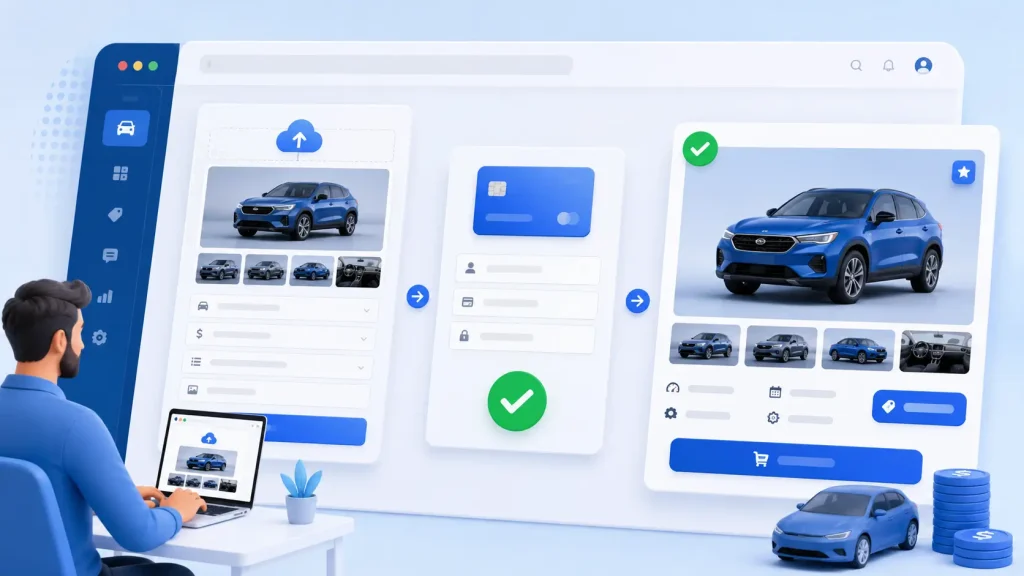
The most direct way to earn is to charge a fee each time someone posts a car. A private seller pays a small flat fee to list their vehicle for a set time, say 30 or 60 days.
This works well because it is easy to understand and starts earning from day one. You can even offer a few free listings to attract sellers, then charge once your traffic proves its value. With CL Car, you set the price, the listing duration, and how many free posts (if any) each user gets.
Best for: Sites with steady private-seller traffic and a busy local market.
2. Featured ads (premium placement)
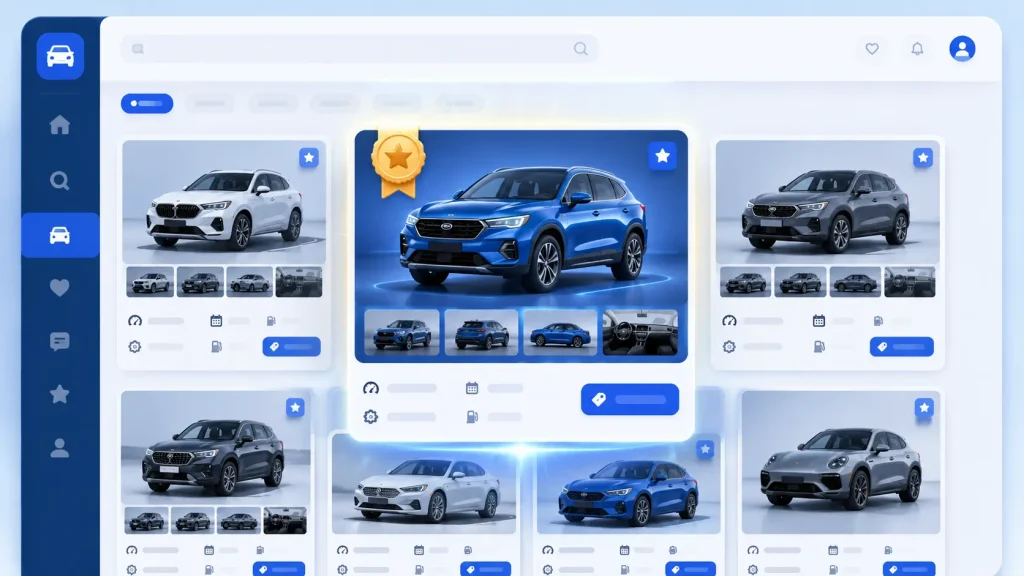
Some sellers want their car seen first. A featured ad highlights a listing, often with a badge, a colored border, or a spot in a “featured” carousel on the homepage and search pages.
Sellers happily pay extra for this visibility because it means faster sales. You charge a premium on top of the normal listing fee. It is one of the easiest upsells on a car listing website.
Best for: Any site — featured ads are a simple, high-margin add-on.
3. Top ads (pin to the top)
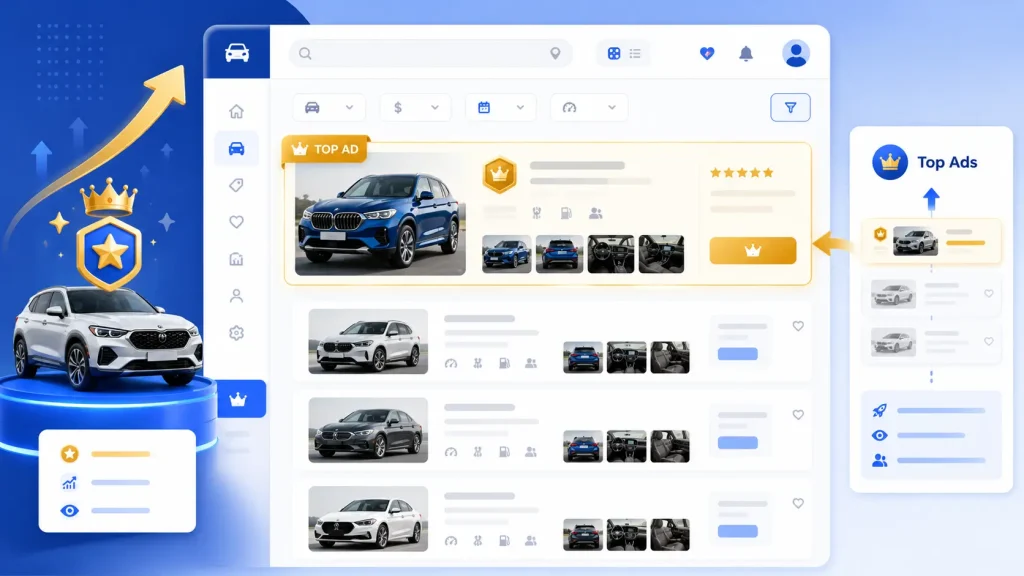
A top ad pushes a listing to the very top of its category or search results for a set period. While featured ads stand out visually, top ads win on position — they are the first thing buyers see.
Dealers with time-sensitive inventory love this because position drives clicks. You can sell top placement by the day, the week, or the month.
Best for: Competitive categories where many similar cars are listed.
4. Bump-up ads (refresh to the top)
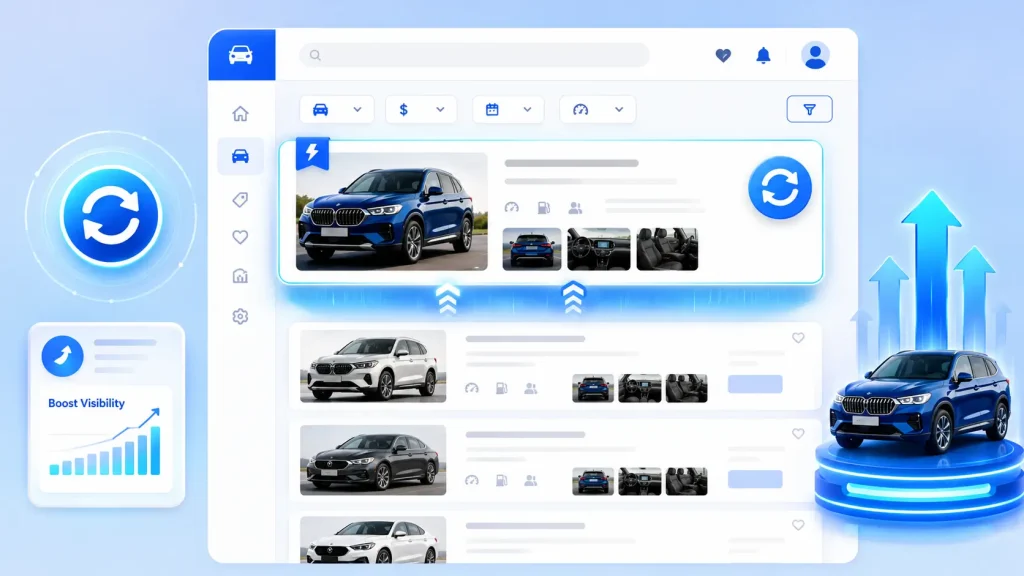
Listings naturally sink as newer ones appear. A bump-up lets a seller “refresh” their listing back to the top of the newest results without creating a new post.
It is a low-cost, repeatable purchase, so sellers buy it again and again to keep their car visible. Small individual fees add up to reliable recurring income.
Best for: High-volume sites where listings move down quickly.
5. Membership plans (dealer packages)
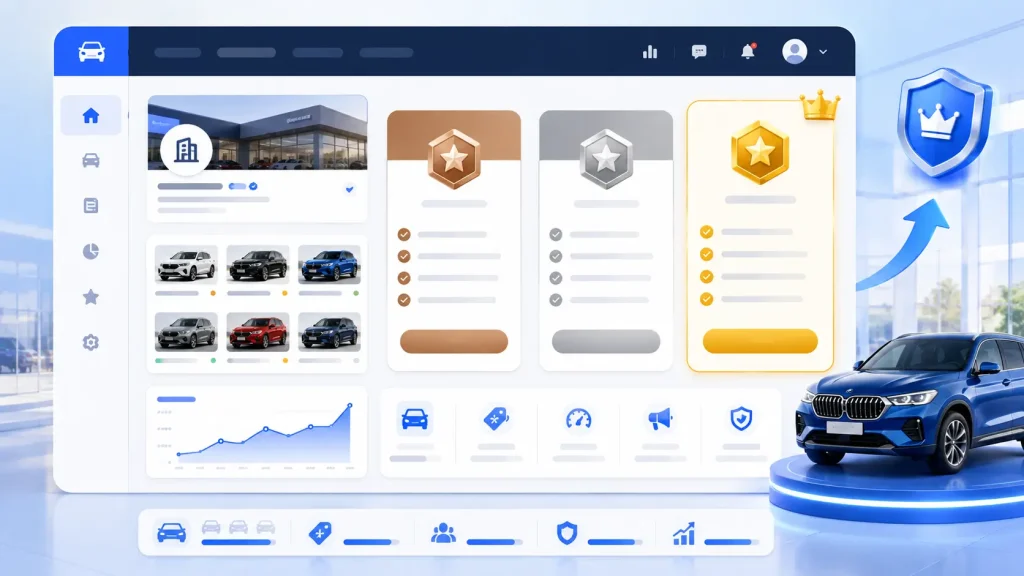
Instead of charging per car, you can sell packages to dealers. A dealer pays a set price for the ability to post a certain number of listings, often with perks like included featured spots or a branded store page.
Dealers prefer predictable pricing, and you get larger, upfront payments. This is where many car listing sites earn the bulk of their money, because dealers list many cars at once.
Best for: Sites that attract professional dealers, not just private sellers.
6. Subscriptions (recurring billing)
Subscriptions turn one-time buyers into recurring revenue. A dealer or power seller pays monthly or yearly for ongoing access, unlimited or high-volume listings, and premium features.
This is the most stable income model because it is predictable and renews automatically. A base of subscribed dealers gives your business a dependable monthly floor. CL Car supports recurring subscription billing out of the box.
Best for: Established sites ready to build steady, long-term income.
7. Listing claims (verified dealer profiles)

You can pre-load your site with dealer or business listings, then let those owners “claim” their profile for a fee to manage it, add details, and appear verified.
A verified badge builds buyer trust, and dealers pay to control how they appear. It is a smart way to earn from listings you created yourself, while making your directory look full and active from launch.
Best for: Local or regional directories with many dealerships to list.
8. Commission marketplace (earn a cut per sale)
In a commission model, you take a percentage of each sale made through your platform. Instead of charging to list, you earn when a deal closes.
This aligns your success with your sellers’ success and can be very lucrative on higher-value items like cars. CL Car includes a commission marketplace option, so you can run your site like a true multi-vendor platform and collect a cut automatically.
Best for: Multi-dealer marketplaces that manage transactions on-site.
Bonus: extra income streams
Beyond the eight core models, a busy car listing website can also earn from banner advertising (selling ad space to local dealers, insurers, or finance companies), affiliate offers (car loans, warranties, or insurance), and add-on services like vehicle history reports. These pair well with any of the models above once your traffic grows.
How much can a car listing website earn?
Earnings depend on traffic and how many models you run. A new local site might start with paid and featured listings for modest monthly income. As dealers join and you add memberships and subscriptions, revenue becomes larger and more predictable. Add a commission marketplace and banner ads, and a single site can support a real business.
The key is to stack models: charge to list, upsell promotion, lock in dealers with subscriptions, and earn from traffic. Each stream is small on its own, but together they add up.
How to set up these revenue models with CL Car
Knowing the models is one thing. Turning them on without hiring a developer is another. This is where CL Car makes it simple. It is a car listing WordPress theme built for dealers, marketplaces, and classifieds, and it is powered by the Classified Listing Pro plugin, so the money-making tools are built in.
With CL Car you get all 8 monetization methods in one theme — paid listings, featured, top, bump-up, memberships, subscriptions, claims, and a commission marketplace. You can accept payments through PayPal, Stripe, Authorize.net, offline payments, and WooCommerce gateways, so buyers and sellers can pay the way they prefer.
Setup is designed to be code-free. You pick your pricing, choose which models to run, and go live. Sellers submit cars through a simple front-end form (with AI that can even write the title and description), buyers search by make, model, year, price, mileage, and location, and a live buyer–seller chat keeps deals on your platform. You also get 4 modern homepage layouts, reviews with auto schema for Google, and maps built in.
In short, every revenue model in this guide is a setting you switch on, not a feature you have to build. If you want to see the full setup, our guide on how to build a car dealership website walks through it step by step.
Frequently asked questions
How does a car listing website make money?
A car listing website makes money by charging sellers and dealers to post and promote vehicles, and by earning from site traffic. Common methods include paid listings, featured and top ads, bump-ups, dealer memberships, subscriptions, listing claims, and taking a commission on sales. Most sites combine several of these at once.
Do I need to own cars to run a car listing website?
No. You do not hold any inventory. Your business is the platform where dealers and private sellers list their vehicles and reach buyers. You earn from listing fees, promotions, memberships, and traffic, not from selling cars yourself.
What is the easiest way to start earning?
Paid listings and featured ads are the easiest to start with. Charge a small fee to post a car, then upsell a featured or top placement for extra visibility. As your traffic grows, add dealer memberships and subscriptions for steady, recurring income.
Which revenue model earns the most?
It varies, but dealer memberships, subscriptions, and a commission marketplace usually bring the largest and most predictable income because dealers list many cars and pay on a recurring basis. Promotions like featured, top, and bump-up ads add high-margin extra revenue on top.
Can I run all these models on one website?
Yes. A tool like CL Car supports all 8 monetization methods in a single theme, so you can mix and match. Many owners charge to list, upsell promotions, and lock in dealers with subscriptions — all on the same site.
Do I need coding skills to set this up?
No. CL Car is built to be code-free. You choose your pricing and turn on the revenue models you want from the settings, connect a payment gateway like PayPal or Stripe, and start accepting listings.
Final thoughts
A car listing website makes money in more ways than most people expect. From simple paid listings to featured placement, dealer memberships, subscriptions, verified claims, and commission on sales, each model adds another income stream — and you can run them together for the best results.
The smart move is to launch with one or two models, then add more as your traffic and dealer base grow. With a purpose-built theme like CL Car, every one of these revenue tools is already built in, so you can spend your time growing the business instead of building the software. Explore the CL Car car listing theme and see how quickly you can turn your idea into an earning platform.