
On This Page
Starting a car listing website is one of the most profitable online business ideas in the automotive niche. With millions of car buyers and sellers searching online every day, there has never been a better time to launch your own auto marketplace.
This guide walks you through everything you need — from validating your idea to monetizing your platform — in plain, actionable steps.
👉 Check now: Car Listing WordPress Theme
What Is a Car Listing Website?
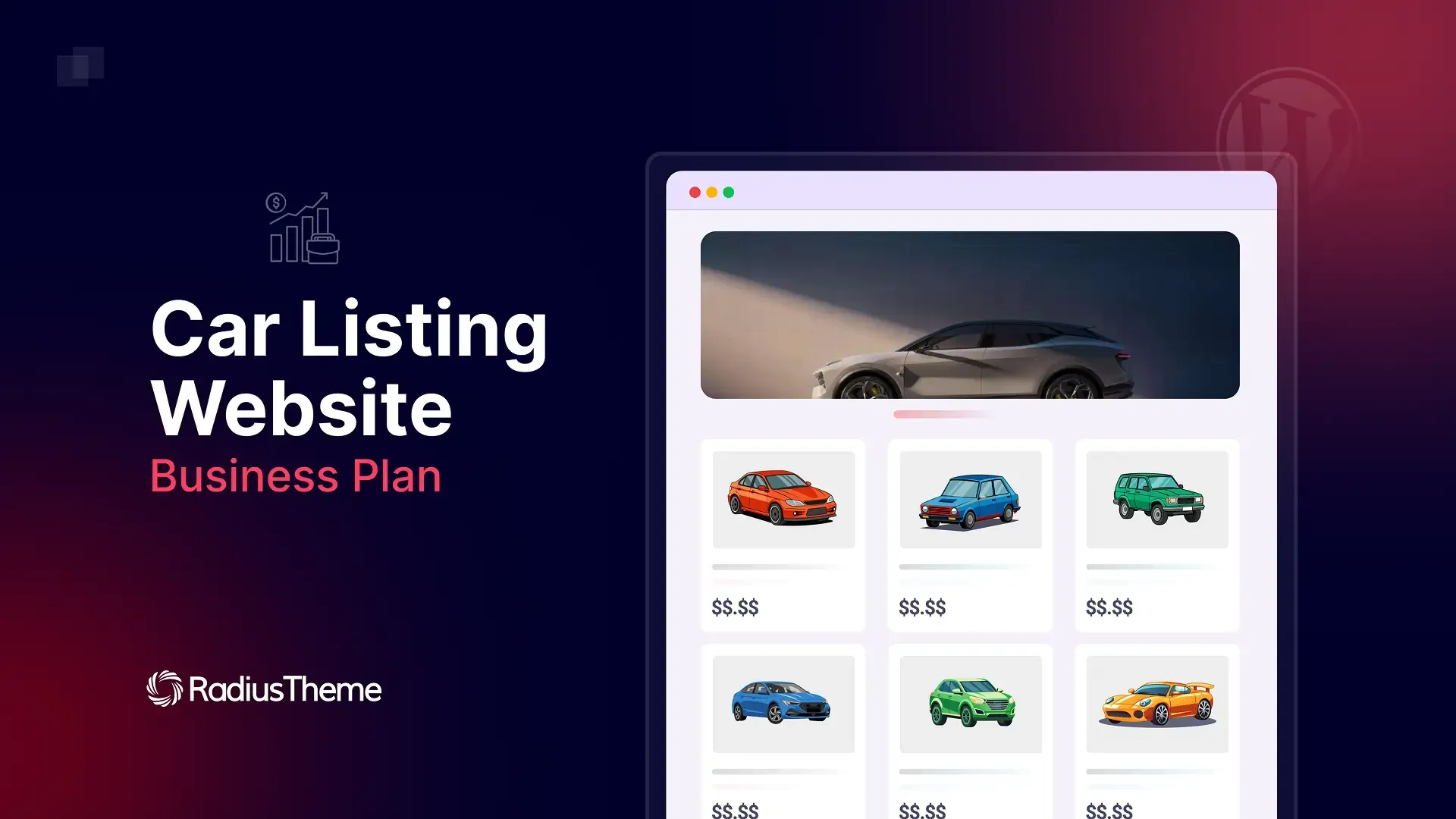
A car listing website is an online marketplace where car dealers, private sellers, and automotive businesses can post vehicle listings for potential buyers to browse, compare, and contact. Think of platforms like AutoTrader, Cars.com, or CarGurus — but built for your specific market, region, or niche.
Unlike a general classifieds site, a car listing platform focuses exclusively on vehicles, which means users get a targeted, trust-building experience.
Is a Car Listing Website a Profitable Business?
Yes — and here is why.
The global used car market was valued at over $1.5 trillion and continues to grow. In the U.S. alone, more than 40 million used vehicles are sold every year. Buyers start their journey online, and dealers pay handsomely to reach them.
Revenue potential at a glance:
| Business Model | Potential Monthly Revenue |
| Dealer subscription plans | $500 – $5,000+ per dealer |
| Featured listing upgrades | $10 – $100 per listing |
| Lead generation fees | $5 – $50 per qualified lead |
| Display advertising | $500 – $10,000+ (CPM/CPC) |
| Affiliate commissions | $50 – $500 per referral |
Even with a small regional site serving 50 paying dealers at $99/month, you are generating nearly $5,000/month in recurring revenue.
Who Should Start a Car Listing Website?
A car listing business is a strong fit if you are:
- A web entrepreneur looking for a recurring revenue model
- A local automotive consultant wanting to serve dealers in your area
- A digital agency adding a white-label marketplace to your service portfolio
- A car dealer or wholesaler who wants to control their own listing platform
- An investor looking for a scalable SaaS-style business in a proven market
Step-by-Step Car Listing Website Business Plan
Step 1: Define Your Niche and Target Market
The worst mistake new marketplace founders make is trying to compete with AutoTrader from day one. Instead, niche down.
Profitable niche ideas:
- Used cars under $10,000 (budget buyers)
- Classic and vintage car listings
- Electric vehicle marketplace
- Commercial trucks and vans
- Motorcycles and powersports
- RVs, campervans, and travel trailers
- Local/regional auto marketplace (e.g., “Cars in Texas”)
- Luxury and exotic car listings
Narrowing your focus reduces competition, lowers your marketing cost, and builds stronger audience trust.
Step 2: Conduct Market Research
Before you build anything, validate demand. Here is how:
Search intent analysis: Use tools like Google Keyword Planner, Ahrefs, or Ubersuggest to find how many people are searching for terms like “used cars for sale [city]” or “buy cheap trucks online.”
Competitor gap analysis: Study the top 3–5 car listing platforms in your chosen niche. What features are they missing? What do users complain about in reviews?
Dealer interviews: Call 5–10 local car dealers and ask: “Where do you currently list your inventory?” and “What would make you switch platforms?” Their answers are gold.
Buyer surveys: Post in local Facebook groups or Reddit communities (r/cars, r/whatcarshouldIbuy) and ask what frustrates buyers when searching for vehicles online.
Step 3: Choose Your Business Model
There are four main ways to monetize a car listing website:
1. Subscription-Based (Most Stable) Dealers pay a monthly or annual fee to list their inventory. Offer tiered plans — Basic, Pro, Premium — with different listing limits and features.
2. Pay-Per-Listing (Low Barrier to Entry) Sellers pay a one-time fee per listing. Great for attracting private sellers who do not want a subscription.
3. Freemium + Upgrades Basic listings are free, but sellers pay to feature their listing, add more photos, or appear in premium search positions. This drives volume quickly.
4. Lead Generation Buyers submit inquiries, and you charge dealers per qualified lead. High-value model, especially in competitive markets.
Most successful platforms combine models — free basic listings with paid upgrades and dealer subscription plans.
Step 4: Build Your Website
This is where your car listing WordPress theme becomes your biggest asset.
A purpose-built car listing theme includes the features you need out of the box:
- Advanced search and filter — by make, model, year, price, mileage, location, fuel type
- Vehicle detail pages — with photo galleries, specs, and seller contact forms
- Dealer profiles — with their full inventory, reviews, and branding
- Frontend submission forms — so sellers can post listings without backend access
- Comparison tool — side-by-side vehicle comparison
- Map-based search — find cars near a specific location
- Mobile-responsive design — over 60% of car searches happen on mobile
- WooCommerce integration — to accept listing fees and subscriptions
Recommended WordPress plugins to pair with your theme:
- WP Job Manager or Classified Engine (listing management)
- WooCommerce Memberships (dealer subscriptions)
- WPML or Polylang (multi-language support)
- Yoast SEO or RankMath (search optimization)
- Google Maps API (location-based search)
👉 Good Read: How to Build a Car Dealership Website
Step 5: Set Up Your SEO Strategy
SEO is the most cost-effective long-term traffic source for car listing websites.
Target high-intent keywords:
- “[City] used cars for sale”
- “Buy [make/model] cheap online”
- “[Year] [model] under [price]”
- “Certified pre-owned [model] [city]”
On-page SEO structure:
- Each listing should have a unique, keyword-rich title and meta description
- Use schema markup (Vehicle schema + Product schema) to help search engines understand your listings
- Create city or regional landing pages to capture local search traffic
- Build a blog with car buying guides, reviews, and how-to content to attract top-of-funnel visitors
Technical SEO priorities:
- Fast page load speed (use a CDN, optimize images, enable caching)
- XML sitemap auto-generated for new listings
- Canonical URLs to prevent duplicate listing issues
- Structured breadcrumbs for navigation
Step 6: Attract Sellers First (Supply Before Demand)
The biggest challenge in any marketplace is the chicken-and-egg problem: buyers want inventory, sellers want buyers. Solve the supply side first.
Tactics to attract your first dealers and sellers:
- Offer free listings for the first 3–6 months to build inventory
- Contact local car dealerships directly with a pitch deck showing your platform
- Partner with automotive wholesalers and auction houses
- Import listings from existing dealer DMS (Dealer Management Systems) via CSV or API
- Run a Facebook or Google Ads campaign targeting “car dealers [city]”
Once you have 50–100 active listings, the buyer-side growth becomes much easier.
👉 Good Read: 10 Ways to Attract Buyers and Sellers
Step 7: Drive Buyer Traffic
With inventory live, here is how to attract buyers:
- Google Ads (PPC): Target “used cars near me” and similar high-intent searches
- Social Media: Facebook Marketplace integration and Instagram car spotlights
- Email marketing: Weekly “New arrivals” newsletters
- YouTube: Car walk-around videos and buying tips
- Local SEO: Google Business Profile, local directory submissions
- Content marketing: “Best SUVs under $15,000” type articles that rank in search and drive organic traffic
Step 8: Financial Projections
Here is a sample 12-month revenue projection for a local/regional car listing site:
| Month | Paying Dealers | Avg. Monthly Fee | MRR |
| 1–2 | 5 | $49 | $245 |
| 3–4 | 15 | $79 | $1,185 |
| 5–6 | 30 | $99 | $2,970 |
| 7–9 | 50 | $99 | $4,950 |
| 10–12 | 80 | $99 | $7,920 |
Add featured listing revenue, lead fees, and display advertising — and year-one revenue of $60,000–$100,000 is realistic for a focused regional marketplace.
Startup Costs Estimate:
- Domain and hosting: $100–$300/year
- WordPress car listing theme: $59–$199 (one-time)
- Premium plugins: $200–$500/year
- Marketing budget (first 6 months): $1,000–$5,000
- Total startup: Under $6,000
The capital efficiency of a WordPress-based car listing site is one of its biggest advantages over custom-built platforms.
FAQ: Starting a Car Listing Website
No. You are operating a marketing and advertising platform, not buying or selling vehicles. You are not required to hold a dealer license. Always consult a local attorney to confirm regulations in your specific jurisdiction.
Implement listing moderation workflows, require seller identity verification, and add a clear “Report this listing” feature. Many platforms also manually review the first 1–3 listings from any new seller.
With a purpose-built car listing theme, you can have a functional site live in 1–3 days. A fully customized, production-ready platform typically takes 2–4 weeks.
Yes. Modern WordPress car listing themes are designed for non-technical founders. No coding is required to set up search filters, listing forms, payment processing, or dealer profiles.
Do not compete with them head-on. Instead, dominate a specific city, state, or niche. A site focused on “classic cars in the Southeast” or “electric vehicles in California” can outrank national platforms in those specific searches because of its laser focus and local relevance.
Key Takeaways
A car listing website is a proven, scalable business with real recurring revenue potential. The barrier to entry is low — especially with a WordPress car listing theme that handles the technical heavy lifting. Your competitive advantage comes from:
- Choosing the right niche or geography
- Building supply (dealers/sellers) before marketing to buyers
- Investing consistently in local SEO and content
- Providing a faster, cleaner user experience than legacy platforms
The automotive market is not going anywhere. Cars will always be bought and sold, and the sellers will always need a platform to reach buyers. Be that platform.
Ready to launch your car listing website? Start with a reliable WordPress car listing theme that gives you everything — search filters, dealer profiles, listing submission, and payment integration — in one package.