
On This Page
Modern eCommerce is focused on convenience, fast delivery, and smooth communication with customers. This focus has dictated the operations of businesses that work with bookings.
Customers like making reservations swiftly and comfortably, hence reservation marketplaces. Booking marketplaces are websites on which clients browse services and book appointments.
Our goal today is to bring you a palatable breakdown of everything about reservation marketplaces. Keep it here if you want to learn how to attract and retain clients in the booking marketplace model.
TL; DR: The Booking Marketplace Model
Booking marketplaces are online platforms that let customers easily reserve services. Examples include hotels, fitness classes, healthcare appointments, car rentals, and events.
Key Features:
- Calendars with availability indicators
- Clear frontend design with maps, costs, and images
- Multi-language & currency support
- Real-time online booking with email automation
- API integrations, multiple payment options, and automated invoicing
- Vendor management (attraction, activation, retention, maintenance)
Types of Systems:
- Appointment bookings (e.g., salons, clinics)
- Product rentals (e.g., cars, clothing)
- Event & venue bookings (tickets, spaces)
Monetization Models:
- Commission fees
- Advertising partnerships
- Freemium upgrades
- Subscription tiers
Best Niches: Accommodation, fitness, healthcare, and car rentals.
In short, Booking marketplaces operate by combining convenience, automation, and diverse monetization strategies. However, success depends on vendor management, user trust, and adapting to trends.
What a Booking Marketplace Entails
Reservation marketplaces enable users to book hotel, hostel, and apartment rooms around the world. However, fitness, beauty, healthcare, recruitment, and other industries have taken advantage of the business model.
A comprehensive booking marketplace website has various elements and addons. Among its main features are:
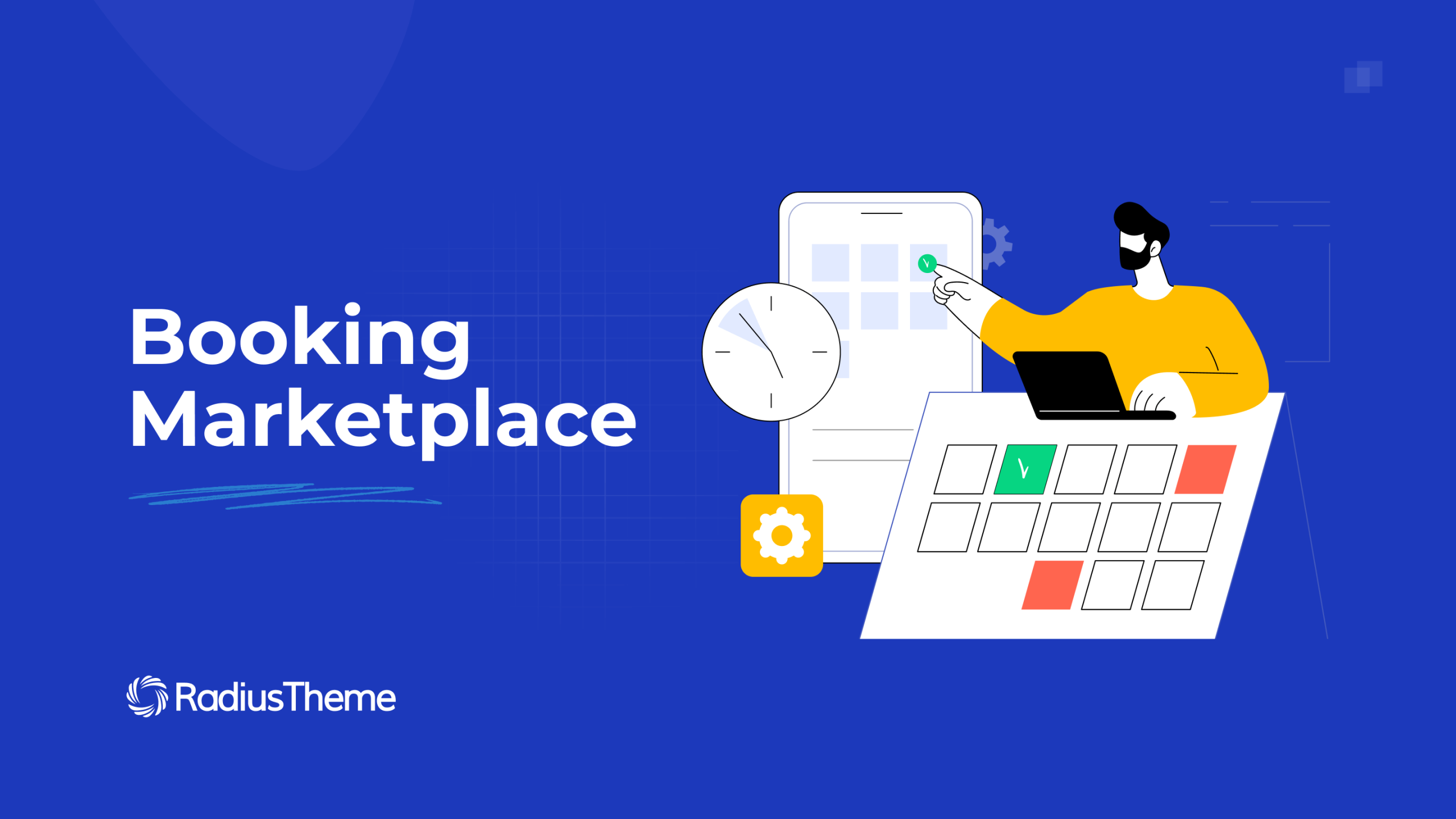
Calendar
A calendar is the most basic element of any appointment website. It’s a key part of communicating with clients.
A responsive and user-friendly calendar communicates your service’s conscientiousness. It should have various booking features, including availability indicators.
Additionally, once customers choose specific dates, the landlord receives a calendar notification.
Appearance and Frontend
The brand identity of booking marketplaces should be clear right from its landing page to its booking form. Your site should have an interactive map, address, cost info and structured booking data.
The reservation form should provide clean fields that ease the booking process. What’s more, rental products should have accompanying high-quality images.
Multiple Languages and Currencies
Booking marketplaces that serve international clientele need to support all applicable languages. Supporting multiple languages increases the number of bookings.
Having an automatic currency converter makes bookings easy too. It also improves the brand credibility.
Online Booking
The reservation system should be truly online; it should have real-time booking information. This assures clients that their reservations are secure against technicalities.
Clients who have secured bookings can then track their rental status. They can view the readiness of their booked rooms and whether their payments are accepted.
Email Automation
A modern booking marketplace offers an automated email management system. It helps customers interact with tech support via contact forms on the website.
Booking confirmations, identity verifications, and other actions come as email notifications.
Integration APIs
Top booking marketplaces have API integrations that facilitate data collection. This opens up many possibilities for exploiting the gathered data.
Site owners can do this by connecting their booking platform to external services. For example, MailChimp for newsletters, Sphinx and Elastic Search for data tracking for various queries.
Multiple Payment Options
Accommodation and vehicle rental services need a reliable payment system. This helps residents of different countries and cities choose payment methods that suit them.
Some people can only pay with credit cards, bank transfers, PayPal, and other online transfer systems. Having all these options can increase your online bookings.
Invoicing
Automated invoicing has replaced manual invoicing over time. A well-automated invoicing system has an invoice number, clear service breakdown, and tax rates.
The system aids in reservation data management. Users can utilize the customer data and financial data for marketing and accounting purposes.
Vendor Management
The booking marketplace vendor management is how it oversees relationships with vendors. This process has the following levels:
- Attracting vendors: After deciding the type of reservation marketplace you want, you should find the best service providers. This should include various marketing strategies that set the tone for future relationships with your vendors.
- Vendor activation: This is the moment when service providers begin their activities on the marketplace.
- Vendor retention: This is a combination of all efforts that prevent vendors from exiting from your marketplace. They include useful instruments, smooth payments, and easy dashboard management.
- Vendor maintenance: The marketplace should work to ensure that vendors deliver quality results. You should set acceptable performance parameters and conduct ongoing quality control.
Booking Marketplaces’ Financial Performance
Booking marketplaces are a global phenomenon, with examples like Booking.com dominating global travel. To examine the performance of these marketplaces, we’ll use one of them as an example.
Booking.com is the largest travel marketplace on the planet, with over 1.1 billion nights booked in 2024. It also sold 49 million airline tickets in the same year.
The marketplace saw $165 billion in gross bookings and $23.7 billion in revenue. These numbers reflect its dominance, especially in Europe.
Compared to other marketplace types:
- It benefits from a high transaction volume just like Etsy and other eCommerce platforms. Etsy has a 78% repeat customer sales rate.
- Booking.com receives 53% of reservations made over 90 days in advance. Other on-demand marketplaces like Uber and Lyft focus on real-time matching with customers.
- Booking.com sellers list inventory passively while mostly pushing for active buyers. On the contrary, freelance and on-demand marketplaces like Upwork and Lyft demand committed buyers and sellers.
- Booking.com boasts high booking volume and global reach. This surpasses giants like Airbnb, which has over 7 million listings in different countries.
Types of Online Booking Systems
There are a few types of online reservation systems depending on what they facilitate. They include:
Type1: Appointments
In this booking type, service sellers create time slots. Their customers can then book the service during the most convenient time slots.
This type of online appointment system is best for dental practices, salons, and tuition classes, among others.
Type 2: Product Rentals
This booking system is perfect for businesses renting out products. Such systems allow customers to choose the dates between which they want to have the product.
Rental reservation marketplaces are perfect for car and clothing rental businesses. Fitzroy is one website that falls under this classification.
Type 3: Event and Venue Bookings
Another popular category is the event and venue bookings. These websites sell event tickets and venue bookings.
Event booking sites have venue calendars to indicate dates on which venues are available. On the other hand, venue bookings show counts of remaining tickets.
How Booking Marketplaces Benefit Sellers
- Multiple booking type options from seller panels
- Individual seller panels for booking management
- Easy receiving and approving customer booking and cancellation requests
Monetization Models for Booking Marketplaces
Although all website business models have monetization strategies, reservation marketplaces have some unique elements. Here are the most popular monetization models for booking marketplaces:
Commission Model
The commission model is common among all marketplace types, including reservation ones. Their earning potential depends on the property type, location, and the total cost landlords quote.
Such a platform earns by deducting a fee from the payment a customer makes on the platform. The rest of the booking fee is transferred to the service provider.
Advertising Model
Advertising is the most popular monetization strategy among all booking marketplaces. Ads have many benefits with relevance and strategic placement in mind.
Partnering with related services can increase monetization and bring in new partners. For example you can offer discounts if customers purchase services like taxi rides through your site.
Relevant ads, such as necessary car insurance improve the user experience as they improve revenue generation.
Freemium Model
The freemium model is most often used as a secondary monetization method, rather than the main one. What’s more, it is applied to the service providers – not the consumers.
Booking marketplaces under this model offer a free use option for their services. Additionally, they also avail some exclusive booking options for a recurring or fixed fee.
Subscription Model
This model is often applied to marketplaces for exclusive or expensive services. The marketplaces in this model segment roles of service providers.
Those seeking small profits can incur a minimum cost to access just a few features. More ambitious businesses can go for the highest subscription levels to remove all restrictions.
The greatest challenge with this model is that it needs to gain a wide audience in advance. Websites starting off can offer free services to attract future paying customers.
Best Niches for Booking Marketplace Application

Although there are many niches that use the booking marketplace business model, some are better suited to it than others. Among them are:
Accommodation
Accommodation is essential in the modern tourism landscape. Travelers often go online as they consider suitable places to stay as they explore cities they visit.
Booking marketplaces support tourists with search and booking services for hotel, resort, and motel providers. These booking solutions accept room reservations and enhance different customer services.
Excellent accommodation booking marketplaces include:
- Booking
- HotelMinder
- Trivago
- Sirvoy
- Agoda
- Kayak
Fitness
The online operations of gyms and other fitness businesses have grown vastly since the Covid pandemic. Most people seeking new trainers and gyms start their searches online.
Various booking websites have filled the gap, connecting clients with fitness spots and professionals. They have online session scheduling and reservation systems.
Top gym and fitness booking marketplaces include:
- Fresha
- Sofia Health
- ClassPass
- Mindbody
- Mariana Tek
- Bookeo
Healthcare
Modernized medical clinics should have online appointment booking systems. Without them, you lose potential revenue and waste productivity through physical front desk scheduling.
Online booking marketplaces make it easy to make medical appointments 24/7. There are many websites helping hospitals, clinics, and doctors, including:
- Hotdoc
- MediClinic
- Onelife
- Setmore
- Sagenda
- Picktime
- 10to8
Tips: Best Healthcare Directory Website in US
Car Rentals
Although there’s high demand for car rentals, the booking experience is often hectic. Users waste time evaluating the best pricing, necessary features, and vehicle rental insurance possibilities.
A proper solution guides users to the right prices easily. They also aggregate the top websites in terms of quality services and best prices.
The most popular car rental booking websites, include:
- Expedia
- Smartertravel
- Rentalcar
- Monodo
Booking Marketplaces SWOT Analysis
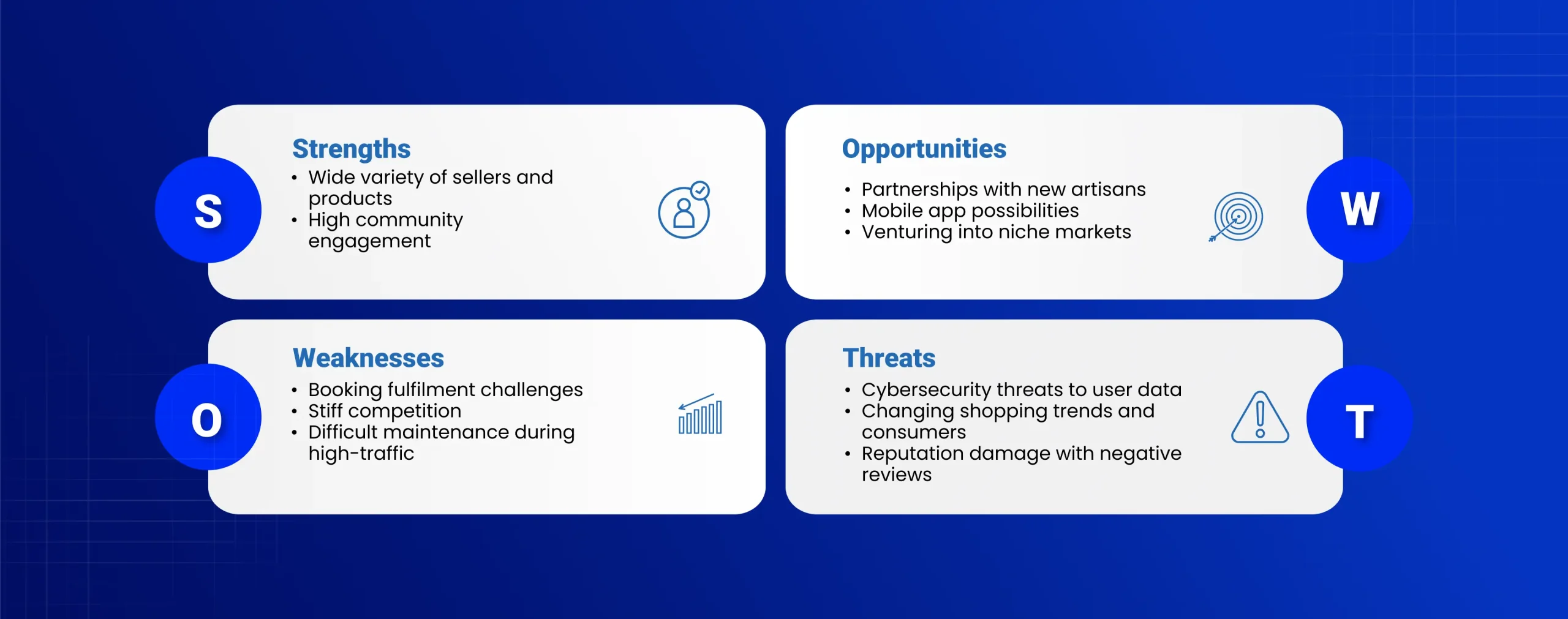
Here’s an analysis of the booking marketplace model with reference to the best businesses using the model. It focuses on the areas that affect the success of booking marketplace businesses.
Strengths
There are a few pillars responsible for the success of the booking marketplace business model.
- Secure payment gateways and buyer protection measures
- Community engagement and seller support
- Wide variety of products and sellers
Weaknesses
Although it is an excellent business model, it has some weaknesses that reduce its efficiency.
- Difficult to maintain during high-traffic periods
- Booking fulfilment challenges
- Difficulty in enforcing platform guidelines among sellers
- Competition from established marketplaces, especially when starting
Opportunities
There are various opportunities that entrants of the model can exploit for excellent results.
- Venturing into niche markets, such as eco-friendly and sustainable products
- Mobile app shopping
- Partnerships with upcoming artisans
Threats
Various elements of this business model leave it vulnerable to damaging occurrences.
- Cybersecurity threats to user data
- Reputation damage from negative reviews
- Strict regulatory changes impacting operations
- Changing consumer and shopping trends
Frequently Asked Questions
A booking marketplace is an online platform that links service providers to customers for time or resource-based reservations. It works like a typical marketplace, but avails services with booking features.
Regular marketplaces entail the sale of physical goods, while a booking marketplace is all about the sale of services. What’s more, it must have features such as calendars and online booking features.
– Calendar and real time booking tracking system
– API integration
– Automated email notifications
– Invoicing and financial tracking
– Multilanguage and multi-currency support
– Multiple payment options
– User-friendly interface
– Commission
– Subscription
– Advertising
– Freemium
– Hybrid models
– Scams and frauds
– Dispute resolution
– Payment processing issues
– Customer service limitations
Many service sellers like booking marketplaces due to their time savings, price transparency, payment protection, and convenience. The convenience and flexibility that these marketplaces provide make them attractive to businesses and clients.
Conclusion
Booking marketplaces simplify reservations across many industries. Its hallmark elements include automation, secure payments, and vendor management.
Flexible monetization models and niche opportunities fuel growth. On the other hand, challenges like competition and cybersecurity demand adaptability.
Success hinges on user trust, seamless experiences, and evolving digital trends.