
On This Page
Quick answer: A business directory website generates local leads by ranking for high-intent “near me” and category searches, then capturing customer inquiries (calls, quote requests, bookings) and routing them to the local businesses listed on the site. Because local searchers act fast — most who search on a phone visit or call a business within a day — a focused directory becomes a repeatable lead engine you can monetize through paid listings, featured placements, lead sales, and memberships. You can launch one on WordPress, free, in about an hour.
Why local lead generation is a real opportunity
Local intent is one of the most commercially valuable signals on the internet because the searcher is usually ready to act. The data makes the case plainly:
- The Google local 3-pack appears at the top of results for the large majority of local-intent queries, making local visibility prime digital real estate.
- Roughly 88% of people who run a local search on a smartphone visit or call a business within a day — these are buyers, not browsers.
- “Near me” mobile searches have surged over recent years, and a meaningful share convert into a purchase within a week.
- Local SEO is reported to deliver a cost-per-lead well below traditional outbound marketing (one analysis cites around 61% lower), and unlike paid ads, organic rankings compound over time instead of stopping when the budget does.
There’s a second, newer reason this matters: AI search is reshaping discovery. A large share of local queries now trigger Google’s AI Overviews, and a growing portion of consumers ask tools like ChatGPT for local business recommendations. Research suggests appearing in those AI recommendations is far harder than ranking in classic local results — and that online directories are among the sources these systems pull from. A well-structured directory is positioned to benefit from both traditional and AI-driven discovery.
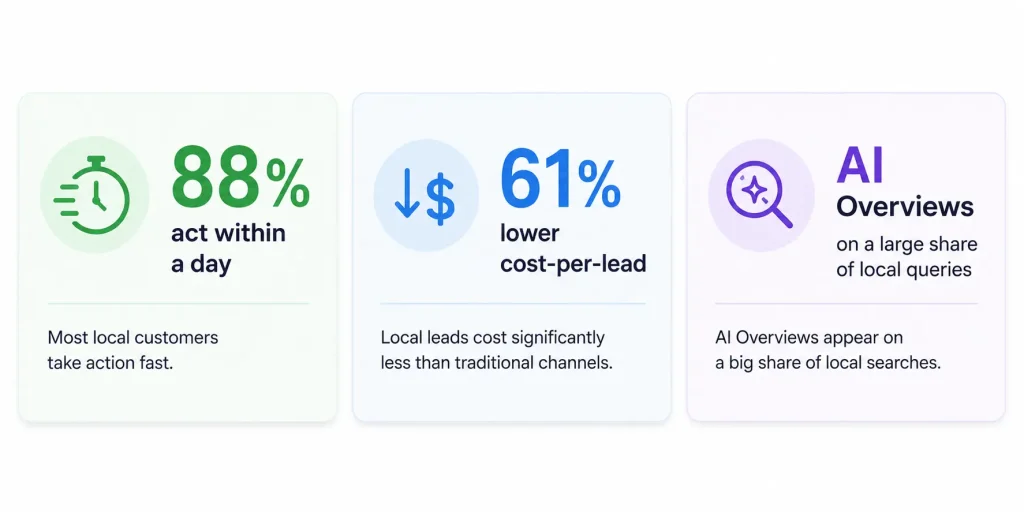
A note on the numbers: figures like these come from local-SEO surveys and vendor studies and vary by methodology and source. Treat them as directional evidence of a strong trend, not guarantees — and always measure your own results.
What a business directory website is (and how it generates leads)
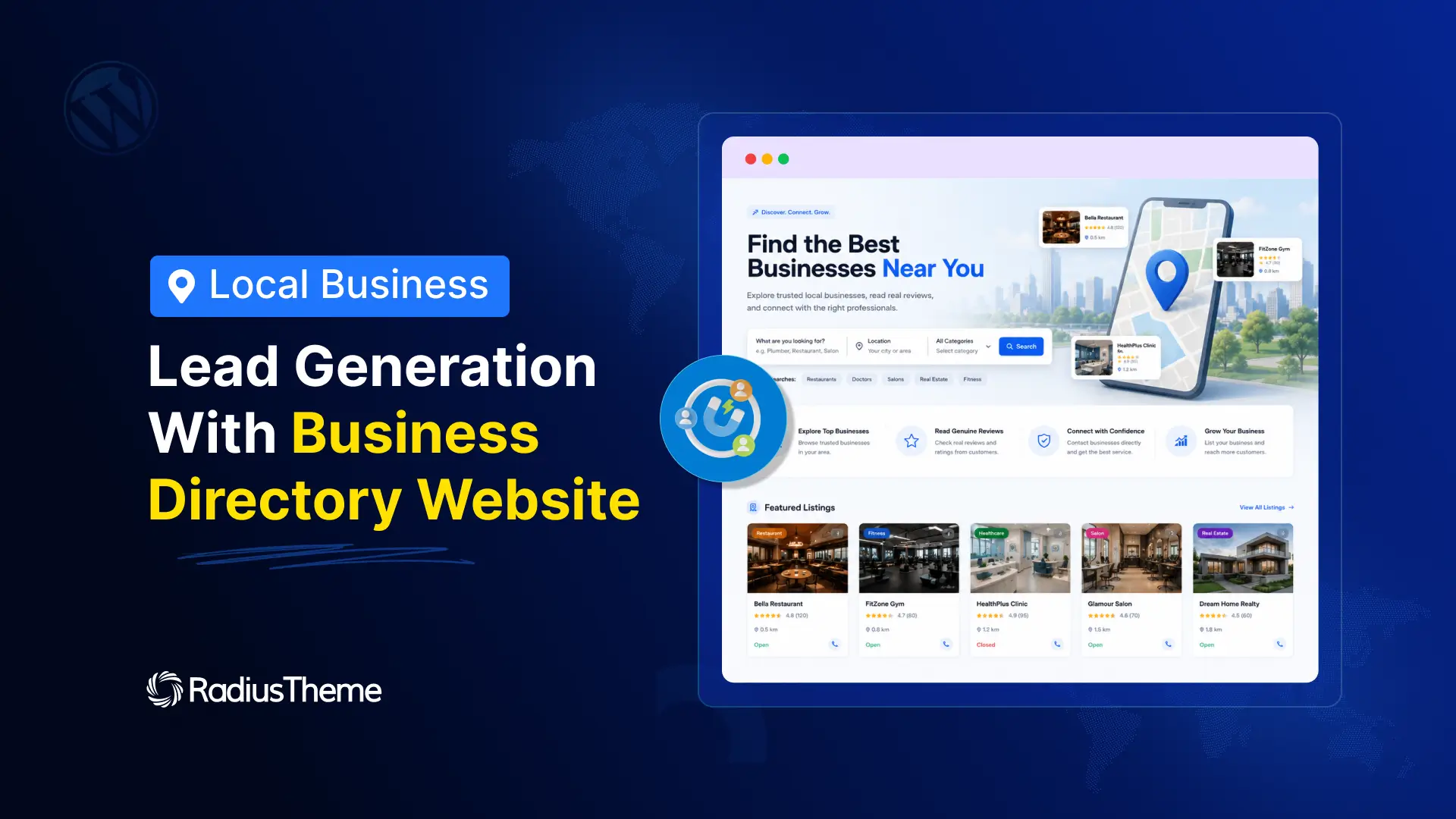
A business directory website is a searchable collection of business listings — think a niche, modern Yellow Pages — organized by category and location. Visitors come to find a provider; businesses get found. Lead generation happens in a simple loop:
- Attract high-intent traffic. The directory ranks for searches like “emergency plumber Denver” or “best vegan cafes Austin,” and earns visibility in maps and AI answers through consistent, structured local content.
- Capture the inquiry. Each listing has contact forms, quote requests, call buttons, or booking — so the searcher’s interest becomes a trackable lead.
- Deliver (and monetize) the lead. The inquiry is routed to the listed business. You can provide leads free to attract listings, or charge for them.
The directory’s edge over a single-business site is aggregation: one page targeting “dentists in Phoenix” can rank and capture demand for an entire category, then distribute that demand to many businesses — each of whom finds a customer worth far more than a flat listing fee.
The directory revenue models — and which lead-gen mechanics fit each
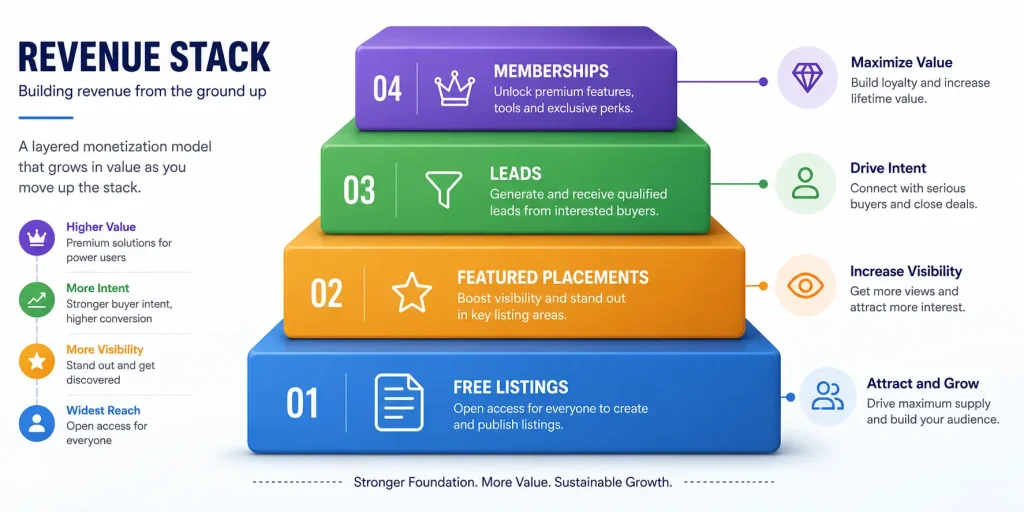
This is where “directory” stops being a content project and becomes a business. The proven models stack on top of each other:
- Free + paid listings. Free listings build inventory and traffic; paid upgrades generate revenue. As one directory operator puts it, the free listings are what make the paid ones worth buying. Best built first.
- Featured / premium placement. Businesses pay to appear at the top of a category or in a featured block — digital shelf space, sold per category. Scales with traffic.
- Lead generation (sell or distribute leads). The directory captures inquiries and forwards pre-qualified prospects to relevant businesses for a fee. This typically earns the most per business in high-value niches (home services, legal, real estate, healthcare) because one customer is worth a lot to the provider.
- Memberships / subscriptions. Recurring access to listing benefits, leads, or a member network — predictable monthly revenue.
- Affiliate / commission. For niches like travel or e-commerce, the directory earns a commission on bookings or sales made through it.
- Advertising. Display or sponsor slots once traffic is substantial.
👉 Good Read: How to Earn Money from Business Directory Website
The sensible sequence: build genuinely useful free listings and real traffic first; add featured placements and paid upgrades once businesses see value in visibility; then layer in lead generation where the niche supports high per-lead value. Trying to charge before you have traffic is the most common way directories stall.
How to choose your directory model: selection criteria
Not every directory idea is worth building. These are the criteria that actually predict whether a local directory will generate leads and revenue — and how to weigh them.
How these criteria were selected: they come from recurring patterns across directory operators and lead-gen practitioners — the factors that consistently separate directories that monetize from those that stall. They’re ordered by impact on lead value.
- Niche lead value (highest impact). Is a single customer worth a lot to the listed business? HVAC, roofing, legal, dental, and real estate justify lead fees; low-ticket categories rarely do.
- Search demand + competition. Real “near me”/category search volume, but not so saturated that ranking is hopeless. Narrowing geography reduces competition.
- Inventory feasibility. Can you realistically populate enough listings to look credible at launch? Free listings and frontend submission help.
- Monetization fit. Does the niche favor leads, featured placements, memberships, or commissions? Match the model to buyer behavior.
- Defensibility. Reviews, structured data, and AI-search visibility that competitors can’t easily copy.
- Operating cost & ownership. Self-hosted (you keep all revenue and data) vs. hosted SaaS (convenient but takes a cut and limits control).
The three ways to build a local directory — compared
Rather than a generic “best platforms” list, here are the three genuine paths to launching a lead-generating local directory, with honest pros, cons, and who each suits.
| Approach | Best for | Cost model | Data & revenue ownership | Main limitation |
|---|---|---|---|---|
| Hosted SaaS directory builder | Non-technical owners who want fastest setup | Monthly subscription (often + fees) | Platform-owned; you rent | Recurring cost; less control; platform lock-in |
| WordPress + directory theme/plugin (self-hosted) | Owners who want control, all revenue, and scalability | One-time/free + hosting | You own everything | You manage hosting and setup |
| Fully custom build | Funded, large-scale or unique platforms | High dev cost | You own it | Expensive, slow, overkill for most local directories |
Expert verdict on the approaches: For a local lead-generation directory, self-hosted WordPress is the pragmatic winner for most people — you keep 100% of the revenue and the lead data, you can run the monetization models above natively, and startup cost can be near zero. SaaS makes sense only if you’ll never want control or margin; custom builds make sense only at funded scale.
Practical use cases (what actually works locally)
- Home-services directory for one metro. “Plumbers / electricians / HVAC in [city].” High per-lead value; monetize with lead distribution + featured placement.
- Niche professional directory. Local attorneys, dentists, or accountants. Memberships plus premium placement; trust signals (reviews, verified profiles) do the heavy lifting.
- Hospitality / food directory. Restaurants, cafes, venues. Traffic-driven; monetize with featured listings and, later, booking commissions.
- Community / “best of [town]” directory. Broad local coverage that builds an audience first, then sells featured spots and sponsorships.
A useful starting discipline borrowed from lead-gen practitioners: launch narrow — one city/ZIP, one category, one capture channel — prove that listings rank and inquiries convert, then expand.
Honest limitations and drawbacks
A directory is a real business, not passive income. Be clear-eyed:
- Cold-start problem. Empty directories don’t rank or convert. You need enough quality listings and traffic before monetization works — that takes consistent effort up front.
- SEO takes time. Organic local rankings compound, but compounding means slow at first. Budget months, not days.
- Lead quality must be real. Selling low-quality or unverified leads burns trust fast; you must capture and qualify genuinely useful inquiries.
- AI-search visibility is hard. Appearing in ChatGPT/AI Overview recommendations is reportedly far tougher than ranking in classic local results — structured data and reviews help, but it’s not automatic.
- Maintenance & accuracy. Outdated listings (wrong hours, dead numbers) erode trust and rankings; directories need upkeep.
- Competition & moats. Big incumbents dominate broad categories — which is exactly why niche + local focus is the realistic path in.
None of these are dealbreakers; they’re the reasons a focused directory with a clear monetization plan beats a broad, unmaintained one.
Final recommendations by user type
- Solo entrepreneur / side-project builder: Start self-hosted and free. Pick one high-value local niche, populate free listings, and prove rankings before spending.
- Local marketing agency: A directory is a recurring-revenue asset and a lead source for client services. Self-hosted WordPress gives you white-label control and full margin.
- Existing local business / association: Build a community or “best of” directory to own your category’s discovery layer and add featured/membership revenue.
- Non-technical owner who values speed over control: A hosted SaaS builder is acceptable — just accept the recurring cost and reduced ownership.
Getting started free: Radius Directory (transparent recommendation)
Disclosure: This section recommends a specific free product. It’s included because it fits the “self-hosted, full-ownership, low-cost” path this guide concludes is best for most local directories — not as a paid placement. Evaluate it against your needs, and verify current details on the official page.
If the self-hosted WordPress route is right for you, Radius Directory is a genuinely free directory theme built for exactly this use case. Per its official page, it’s free forever, with no listing caps, no city restrictions, and usable on unlimited domains, and it’s powered by RadiusTheme’s Classified Listing plugin (an Envato Power Elite author).
Why it maps to this guide’s criteria:
- Built-in monetization — paid listings, featured/top listings, bump-ups, memberships, subscriptions, claim listings, and pay-per-submit, so every revenue model above is supported natively.
- High-intent search UX — AJAX advanced search with radius/geolocation, auto-suggestions, and custom-field filters, which directly serve “near me” demand.
- Native payments — PayPal, Stripe, Authorize.Net, Razorpay, and WooCommerce.
- Fast, no-code setup — one-click install, drag-and-drop Elementor building, and an AI form builder; the vendor positions launch at “under an hour.”
- Scale + SEO — optimized queries and caching for large listing volumes, plus schema-markup support and compatibility with Yoast/Rank Math — relevant for both classic and AI-driven discovery.
Pros: Free core with no domain/listing limits; complete data and revenue ownership; all the standard directory monetization tools included; modern AI-assisted setup.
Cons / honest notes: The free tier is “bug-fixing support only” — priority support, the full 20 addons, and premium themes sit in paid bundles (paid plans start at a modest annual price). As with any vendor, treat marketing phrases like “launch in under an hour” as best-case, and confirm which specific features are free vs. Pro before committing.
Best for: Anyone who wants to own a local lead-generation directory — solo builders, agencies, and local organizations — without a recurring SaaS bill to start.
Expert verdict: For testing the directory model with zero upfront software cost while keeping full control of your data and revenue, a free, self-hosted theme like Radius Directory is a sensible starting point. Start free, validate that listings rank and inquiries convert in one niche, then upgrade only if and when revenue justifies it.
Frequently asked questions
1. How does a business directory website actually make money?
Through layered streams: paid and featured listings, selling or distributing captured leads, memberships/subscriptions, affiliate commissions, and advertising. Lead generation usually earns the most per business in high-value niches.
2. Is local lead generation still worth it?
Yes. Local searchers are high-intent — most who search on mobile contact a business within a day — and local SEO typically delivers a lower cost-per-lead than paid outbound, with rankings that compound over time.
3. Do I need technical or coding skills to build a directory?
Not necessarily. Hosted builders and modern WordPress directory themes offer one-click setup and drag-and-drop building. You do need to invest time in listings, SEO, and upkeep regardless of platform.
4. How long until a directory generates leads?
Plan for months, not days. Organic local rankings build gradually. You can speed early traction by launching in one narrow niche/location and adding paid promotion selectively.
5. Which niche makes the best local directory?
One where a single customer is highly valuable to the business — home services, legal, dental, real estate — and where there’s real “near me” demand but manageable competition. Narrow geography reduces competition.
6. Self-hosted WordPress or a hosted SaaS directory — which should I pick?
Choose self-hosted WordPress if you want to keep all revenue and data and control monetization. Choose SaaS only if you prioritize speed over ownership and accept recurring fees and platform limits.
7. Can I start a business directory for free?
Yes. A free, self-hosted directory theme such as Radius Directory lets you launch on WordPress with no licensing cost and no listing limits; you only pay for hosting and optional premium upgrades later.